Wednesday, April 12, 2023

Trusted CI Webinar: Cybersecurity Operations for the NSF ACCESS Cyberinfrastructure, April 24th @11am EST

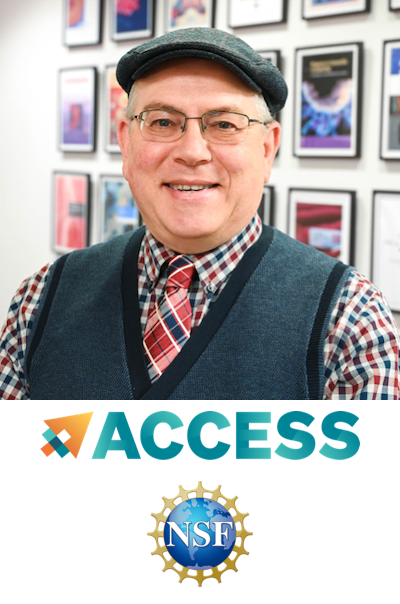
PSC's Derek Simmel is presenting the talk, Cybersecurity Operations for the NSF ACCESS Cyberinfrastructure, April 24th at 11am (Eastern).

Please register here.

On September 1, 2022, the U.S. National Science Foundation (NSF) ACCESS Cyberinfrastructure started production operations, ushering in a new era following two decades of cooperative cyberinfrastructure partnerships among several leading centers for High Performance Computing (HPC) at U.S. universities and research institutions under the NSF TeraGrid and XSEDE projects. The NSF ACCESS Cyberinfrastucture is composed of five funded projects, including an ACCESS Coordination Office and four tracks representing (1) resource allocations, (2) user support and training, (3) operations, including cybersecurity, data management and networking, and (4) monitoring and measurement services. ACCESS Resource Provider (RP) sites include several NSF-funded HPC systems deployed at U.S. universities and research facilities nationwide, on which computing time and storage are allocated on a peer-reviewed basis managed through the ACCESS project.

In this webinar, we will describe the functions and activities of the ACCESS Cybersecurity Operations Group, and summarize the progress, challenges, and lessons learned in its first year. Topics will include authentication and identity management (AIM), cybersecurity communications and readiness, policy development, and future directions.

Speaker Bio:

Derek Simmel's career in Cybersecurity and HPC spans over four decades. Derek joined the technical staff of the CERT Coordination Center at Carnegie Mellon University's Software Engineering Institute in 1995. He brought his experience to the Pittsburgh Supercomputing Center (PSC) in 2001. Derek is currently a co-PI for the U.S. National Science Foundation (NSF) ACCESS COre National Ecosystem for CyberinfrasTructure (CONECT) project, and leads Cybersecurity Operations for ACCESS. He also provides infrastructure design, cybersecurity and scientific workflow support for PSC's NSF-funded Bridges-2 system, and PSC's NIH-funded Brain Image Library, HuBMAP, and ANTON projects. Since 2011, Derek has chaired The Americas Grid Policy Management Authority (TAGPMA), one of three PMAs that comprise the Interoperable Global Trust Foundation (IGTF). He has served on the Technical Steering Committee for the Linux Foundation OpenHPC project since 2016, and on the Governing Board for OpenHPC since 2019.

---

Join Trusted CI's announcements mailing list for information about upcoming events. To submit topics or requests to present, see our call for presentations. Archived presentations are available on our site under "Past Events."

Tuesday, March 21, 2023

SAVE THE DATE: Announcing the 2023 NSF Cybersecurity Summit, Oct 24-26, 2023 in Berkeley, CA

Please mark your calendars for the 2023 NSF Cybersecurity Summit  planned for 3 full days, October 24-26 at the Lawrence Berkeley National Laboratory, in Berkeley, CA.

Trusted CI is welcoming other groups to schedule events the week of October 23rd around the Summit that may be of interest to our community. For planning purposes you may want to reserve the full week to attend these meetings. More details will be shared as planning progresses.


Stay tuned for more information by following the Trusted CI Blog or our Announcement email list for more updates.


On behalf of Trusted CI


Monday, March 13, 2023

Announcing the 2023 Trusted CI Open Science Cybersecurity Fellows

Trusted CI, the NSF Cybersecurity Center of Excellence, is excited to announce the Trusted CI Open Science Cybersecurity Fellows. Seven individuals with professional interests in cybersecurity have been selected from a nationally competitive pool. During the year of their Fellowship, they will receive recognition and cybersecurity professional development including training and travel funding to cybersecurity related events.

The 2023 Trusted CI Open Science Cybersecurity Fellows are:

Ramazan S. Aygun

Director of Center for Research Computing at Kennesaw State University

Ramazan S. Aygun is the Director of Center for Research Computing at Kennesaw State University and Associate Professor of Computer Science with joint appointment at the School of Data Science and Analytics.  He has published more than 130 refereed international journal papers, conference papers and book chapters in various aspects of data science including big data computing, machine learning, multimedia forensics, data mining, data modeling, data communications, data compression, data presentation, data retrieval, data indexing, data querying, and data fusion. His most recent work includes trustworthy machine learning and developing fair and explainable machine learning models by studying possible bias in the datasets. He is recently leading NSF funded project titled “CC* Data Storage: High Volume Data Storage Infrastructure for Scientific Research and Education at Kennesaw State University Shared as Open Science Data Federation Data Origin.” Dr. Aygun served as a program co-chair of IEEE International Symposium on Multimedia in 2012 and 2018. He has also served on the organization and program committees of more than 60 conferences and workshops. He is also serving as an Associate Editor of IEEE Transactions on Multimedia. He is a co-author of the book titled Data Analytics for Protein Crystallization.


Phuong Cao

Research Scientist at the Cybersecurity Division at the National Center for Supercomputing Applications (NCSA) at the University of Illinois at Urbana-Champaign 

Phuong Cao is a Research Scientist at the Cybersecurity Division at the National Center for Supercomputing Applications (NCSA) at the University of Illinois at Urbana-Champaign. His research mission is to secure cyberinfrastructure, in particular high performance scientific computing, e.g., Blue Waters supercomputer. He has a broad interest in security, with a multidisciplinary focus on Internet-scale measurements of operational systems, deep measurement driven analytics using probabilistic graphical models, ML/AI-driven honeypot for early attack response, and machine assisted proofs of federated authentication protocols. Prior to joining NCSA, he has had hands-on experience in the network security industry, including reverse engineering of polymorphic computer viruses, responding to globally distributed denial of service attacks (Akamai’s CDN, LinkedIn), securing the Watson Health Cloud (IBM z Systems), and formal verification of smart contracts and OAuth protocols (Microsoft).


Nick Harrison

Information Security Officer for the North Carolina Community College System

Nick Harrison is an Information Security Officer for the North Carolina Community College System, where he helps staff and faculty provide secure technical solutions for the next generation of the nation's workforce. Prior to joining the Community College system, Nick was the Director of Advanced Cyberinfrastructure Services at the Renaissance Computing Institute. He has over twenty years of IT experience in higher education and enjoys learning about cloud and virtualization technologies.


Lori Sussman

Assistant Professor of Technology and Cybersecurity at the University of Southern Maine.

Lori Sussman, Ed.D., is an Assistant Professor of Technology and Cybersecurity at the University of Southern Maine. She was part of the fourth class at the United States Military Academy to admit women and is a West Point graduate. Lori retired from the U.S. Army as a highly decorated colonel. Her military leadership experiences include 15th Regimental Signal Brigade Commander, 2nd Infantry Division Battalion Commander/CIO/G-6, Presidential Communications Officer, Joint Staff J-6 Executive Officer, and Assistant to the Army Chief of the Staff, as well as numerous demanding tactical assignments. Upon leaving service, Dr. Sussman worked in large and small companies, notably Cisco Systems and Hewlett Packard Enterprise (HPE). She is also an entrepreneur, having created several consulting businesses. In these varied roles, Dr. Sussman has managed a spectrum of highly complex organizations engaged in developing, integrating, deploying, and sustaining state-of-the-art technology and security solutions for clients. The Epsilon Pi Tau Technology Honor Society Awarded Dr. Sussman with the Warner Minilecture Award in 2020 and 2021 for her research about Cybersecurity Ambassadors. These individual awards followed recognition by the National Cyberwatch Center as the 2021 Most Innovative Cybersecurity Education Initiative. In 2021, Governor Mills named Dr. Sussman one of eleven veteran aides-de-camp. Her research areas include cybersecurity education, cybersecurity training and awareness, gender equity in technology and cybersecurity, and technology and cybersecurity leadership.


Dr. Gary Rogers

HPC Systems Administrator for the National Institute for Computational Sciences (NCIS) at the University of Tennessee

Dr. Gary Rogers earned his PhD in Computer Science from the University of Tennessee, while starting his career at the National Institute for Computational Sciences. He has over 18 years of HPC experience, many of those as an HPC administrator on some of the fastest supercomputers in the world. He played a key role in the national cyberinfrastructure projects, XSEDE and XSEDE 2.0, as the manager of the System and Operations Support group. He also participated in the XSEDE 2.0 Cybersecurity group, as well as the XSEDE Development Coordination Council. His current interests include developing and deploying secure compute platforms on which sensitive data can be analyzed, while reducing the barrier of entry for researchers to access and use such a platform. He holds an MS in Computer Science from the University of Tennessee, as well as a BS in Computer Science from the University of the South (Sewanee).  


David White

Parks, Recreation, and Tourism Management research professor at Clemson University

David White is a Parks, Recreation, and Tourism Management research professor at Clemson University. He is a Geographic Information Systems (GIS) expert with over twenty-five years in mapping, analytics, and spatial data collection. His most recent work uses mobility data to study visitation behavior in parks and protected areas. Additionally, his research has included several projects developing enterprise data and information systems requiring spatial data visualization and analytics. He holds a Ph.D. in Marine Science from the University of South Carolina.


Andrew Ferbert

Platform Services manager at the San Diego Supercomputer Center (SDSC) at UC San Diego (UCSD).

Andrew Ferbert is the Platform Services manager at the San Diego Supercomputer Center (SDSC) at UC San Diego (UCSD). Andrew’s primary responsibility is supporting SDSC and UCSD researchers through managed systems, operational support, and production systems integration. Throughout his career at SDSC, Andrew has never shied away from challenges and has worked in a variety of roles including desktop support, datacenter physical security, systems administration within HIPAA and FISMA projects, and working on projects with various branches of the United States Armed Force.

Trusted CI Webinar: The Internet2 Routing Integrity Initiative, March 27th @11am EST

Steve Wallace is presenting the talk, The Internet2 Routing Integrity Initiative, March 27th at 11am (Eastern).

Please register here.

The Internet2 Routing Integrity Initiative aims to improve the research and education (R&E) community’s adoption of best practices that strengthen the resilience and reliability of data movement across the R&E network ecosystem to support our shared missions. Routing integrity is an end-to-end challenge that requires the participation of the entire Internet2-networked community and beyond. This presentation will cover the pillars of the Routing Integrity Program and review resources you can use better to understand your organization's adoption of these practices:
  • Measurement and Reporting
  • Education
  • Global Coordination
  • Outreach and Advocacy
  • Adoption of Best Practices

Speaker Bio:

As Internet2’s Director of Routing Integrity, Steve Wallace promotes the adoption and improvement of routing security and integrity throughout the Internet2 community. He has been an active community member for over 24 years, having started as the engineer responsible for the team that built Abilene, Internet2's first network.

---

Join Trusted CI's announcements mailing list for information about upcoming events. To submit topics or requests to present, see our call for presentations. Archived presentations are available on our site under "Past Events."

Thursday, February 16, 2023

Call for Trusted CI Framework Cohort Participation - Response due 24 March 2023


The Framework Cohort is a six month, group engagement aimed at facilitating adoption and implementation of the Trusted CI Framework among NSF Major Facilities, Mid-scales, and research cyberinfrastructure (CI) providers. During the engagement, members of the cohort will work closely with Trusted CI toward implementing the Trusted CI Framework at their facility, emerging with a validated assessment of their cybersecurity program and a strategic plan detailing their path to fully implement each Framework Must. Cohort members will participate in six monthly workshops (lasting three hours each) and spend no more than eight hours each month outside of the workshops on cohort assignments. The fourth cohort will meet from July 2023 through December 2023.

 Since January 2022, almost 70 percent of NSF’s Major Facilities (MFs) have completed a cohort engagement or are currently participating in a cohort. These MFs include ARF, GAGE, IceCube, LIGO, NEON, NOIRLab, NRAO, NSO, OOI, SAGE and USAP. Additionally, NSF’s Mid-scales FABRIC, Network for Advanced NMR (NAN) and Deep Soil Ecotron (DSE); and the Corporation for Educational Network Initiatives in California (CENIC) and Giant Magellan Telescope (GMTO) are cohort participants. 

NSF Major Facilities and Mid-scales  providers wishing to participate in the next Framework cohort engagement should respond to the call by completing the form at the bottom of this page: https://www.trustedci.org/call-for-trusted-ci-framework-cohort  Your response is appreciated by Friday, March 24, 2023.

Wednesday, February 15, 2023

Advancing the Cybersecurity of NSF Major Facilities and National Research Cyberinfrastructure: Trusted CI’s Framework Cohort Achievements in 2022


Trusted CI’s second Framework Cohort, “Bravo”, successfully completed the six-month program of training and workshop engagement focused on learning and applying the Trusted CI Framework. Cohort members entered the engagement with a commitment to adopting the Framework at their sites. They then worked closely with Trusted CI to gather site information and create validated self-assessments of their facility’s cybersecurity programs based on the Framework. In addition, each site emerged with a draft Cybersecurity Program Strategic Plan (CPSP) identifying priorities and directions for further refining their cybersecurity programs. Bravo cohort included the following NSF Major Facilities (MFs) and research cyberinfrastructure providers:

The foundation of the cohort program is the Trusted CI Framework. The Framework was created as a minimum standard for cybersecurity programs. In contrast to cybersecurity guidance focused narrowly on cybersecurity controls, the Trusted CI Framework provides a more holistic and mission-focused standard for managing cybersecurity. For these organizations, the cohort was their first formal training in the Trusted CI Framework “Pillars” and “Musts” and how to apply these fundamental principles to assess their cybersecurity programs.

Concurrent with leading Bravo, Trusted CI continued engagement with the inaugural “Alpha” cohort through the end of 2022. Alpha cohort followed up on the success of the first half of the year by focusing on implementation challenges each cohort member was currently facing. Each of the monthly workshops was led by a different cohort member, with the workshop focused on addressing a specific cybersecurity challenge that the facility was facing. The Trusted CI Framework team is exploring ideas to continue the productive engagement with the cohort alumni.

In January 2023 Trusted CI began a third Framework cohort engagement (“Charlie”). Charlie cohort includes the following organizations:

Trusted CI is excited to be working with these new sites to advance their understanding and implementation of cybersecurity programs and best practices!

For more information, please contact us at info@trustedci.org.


Thursday, February 9, 2023

Trusted CI Webinar: Using the Trusted CI Framework to Create the CFDE Cybersecurity Program, Feb 27th @11am EST

Rick Wagner is presenting the talk, Using the Trusted CI Framework to Create the CFDE Cybersecurity Program, February 27th at 11am (Eastern).

Please register here.

The NIH Common Fund Data Ecosystem (CFDE) aims to enable the broad use of Common Fund (CF) data sets to accelerate discovery. CF programs generate a wide range of diverse and valuable data sets designed to be used by the research community. However, these data sets reside in different locations, and it is challenging or even impossible to work with multiple data sets in an accessible and user-friendly way. To help remedy this problem, the CFDE has created an online discovery portal that helps make CF data sets FAIR (Findable, Accessible, Interoperable, and Reusable) and enables researchers to search across CF data sets to ask scientific and clinical questions from a single access point. The CFDE Coordinating Center oversees CFDE activities and works closely with participating data coordinating centers from other CF programs on an initial subset of data sets, with plans to expand to additional CF data sets. As the security officer for the CFDE Coordinating Center, Rick used the Trusted CI Framework to focus cybersecurity efforts on protecting the trust amongst the CFDE participants. This mission-driven approach significantly clarified the CFDE's cybersecurity planning.

Speaker Bio:

Rick Wagner is a Principal Research Systems Integration Engineer at UCSD. Rick began his career using cyberinfrastructure as a tool for research in astrophysics, working on problems in cosmology and supersonic turbulence. His research was largely done on campus, NSF, and DOE computing resources, the same kinds of systems he later managed for SDSC. Rick took a break from UCSD to work for Globus at the University of Chicago, helping researchers with data management solutions. Now Rick is part of the Research IT team, helping to design solution for projects that cut across the campus and beyond it. He is also trying to smooth the boundary between cybersecurity and research, and was a 2021 Trusted CI Fellow.

---

Join Trusted CI's announcements mailing list for information about upcoming events. To submit topics or requests to present, see our call for presentations. Archived presentations are available on our site under "Past Events."