Showing posts with label USAP. Show all posts

Friday, December 15, 2023

Announcing publication of the Operational Technology Procurement Vendor Matrix

RCRV Photo: The Glosten Associates

The Trusted CI Secure by Design team has completed work on “The Operational Technology Procurement Vendor Matrix.” The purpose of this document is to assist those in leadership roles during the procurement process. It’s meant to help formulate questions for vendors to discuss security controls on devices that will be used for maritime research.

The matrix includes a list of controls, requirements for the control, potential questions for vendors, tips, and real world examples justifying a given control.

For example, Item #3 in the matrix is an inventory requirement stating that security vulnerabilities in vendor-provided software must be patched. The Threat Actor Example we cite to justify the requirement is the WannaCry vulnerability. We include an example question that could be used when discussing with the vendor. (Click the image below to see in better detail.)

The document can be viewed and downloaded here (Note: The file is available in many formats):

https://zenodo.org/doi/10.5281/zenodo.10257812

This document represents the work of many people, including critical feedback from maritime operational technology practitioners (Scripps Institution of Oceanography’s CCRV, and Oregon State University’s RCRV and OOI). We are grateful for their contributions to this effort.

Our goal is to share this matrix and continue to develop its utility after receiving feedback from the Trusted CI community. To contact us, email info@trustedci.org.

Monday, July 24, 2023

Updates on Trusted CI’s Efforts in Cybersecurity by Design of NSF Academic Maritime Facilities

As part of its “Annual Challenge” in 2023, Trusted CI has been engaging with current and future NSF Major Facilities undergoing design or construction with the goal of building security into those Facilities from the outset.  To date, this effort has focused on working with cyberinfrastructure operators in the the academic maritime domain, and has included support of the cybersecurity aspects of the acceptance testing process of the NSF-funded Research Class Research Vessels (RCRVs) at Oregon State University as well as Scripps Institution of Oceanography’s design of the California Coastal Research Vessel (CCRV).  These vessels are all expected to eventually become a part of the U.S. Academic Research Fleet (ARF).

In 2022, Trusted CI studied cybersecurity issues in operational technology (OT) in science and produced a roadmap to help lead to greater security of such systems, and thus Trusted CI’s efforts with security by design of Major Facilities this year are seeking to both refine and apply OT insights gained previously.  The U.S. Antarctic Program (USAP)’s design of the Antarctic Research Vessel (ARV) has also been contributing to Trusted CI’s understanding of cybersecurity issues in operational technology  Trusted CI has also benefited from insights from numerous conversations with domain experts in the academic maritime domain across a variety of ARF institutions, including IT personnel, marine technicians, oceanographers, ship captains, project leadership, and NSF Program Managers.

One of the highlights of this year's security-by-design efforts has been site visits to ships and facilities. The team has made site visits to the R/V Sally Ride and Oregon State University’s Hatfield Marine Science Center in Newport, Oregon, where the R/V Taani — one of the initial three RCRVs being constructed — will be based upon completion of its construction.  These in-person visits, including extensive discussion with personnel involved with the facilities, have provided invaluable insight to supporting Trusted CI’s efforts.

In the second half of 2023, Trusted CI will continue working on security by design with the aforementioned organizations and will also be working with the NSF Ocean Observatories Initiative (OOI) Major Facility, which is in the process of planning a refresh of its autonomous underwater vehicle (AUD) and glider fleets.

Recent site visit photographs:

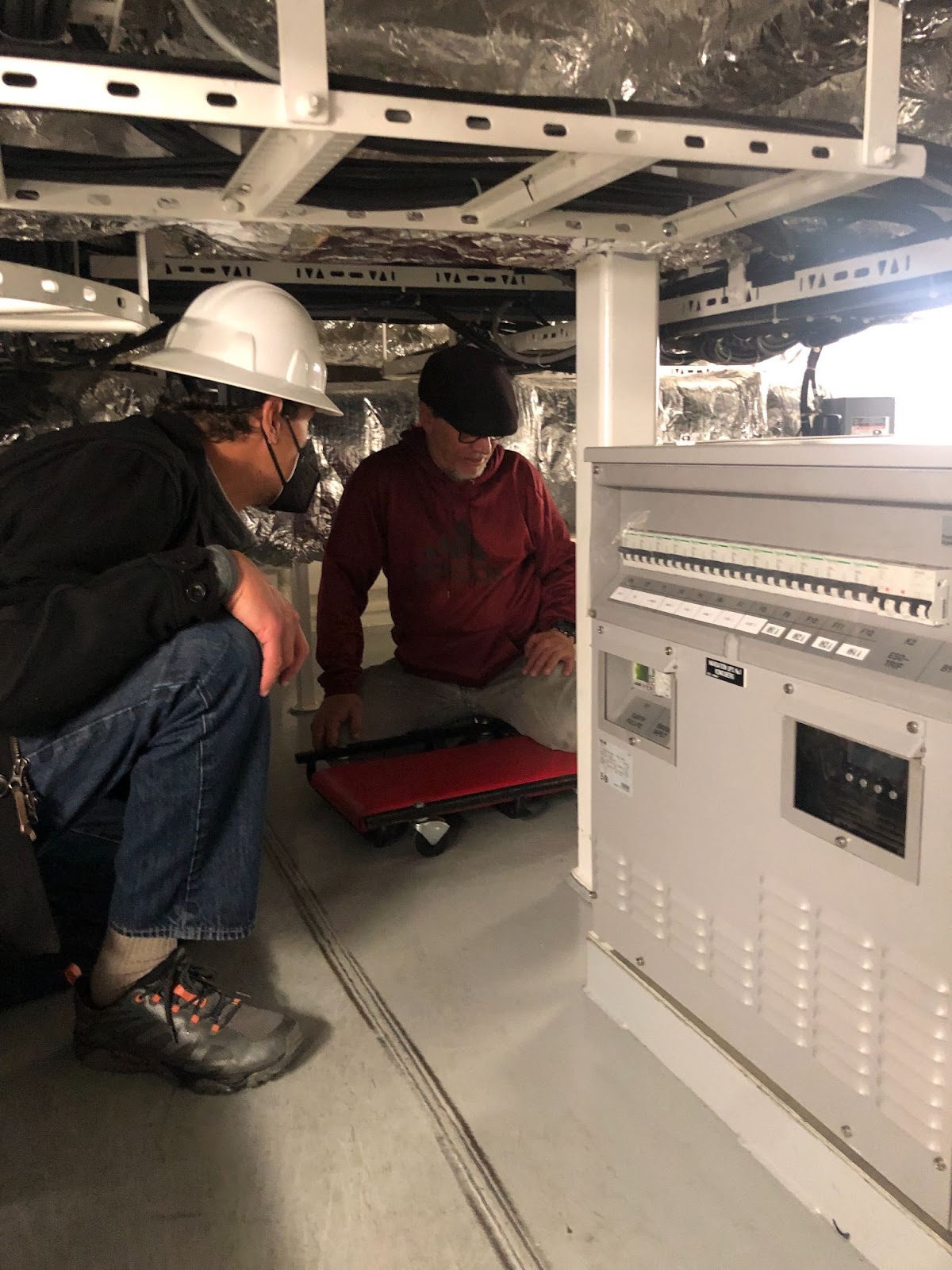
Trusted CI’s Sean Peisertleft, in a crawlspace on the R/V Sally Ride examining operational technology systems.

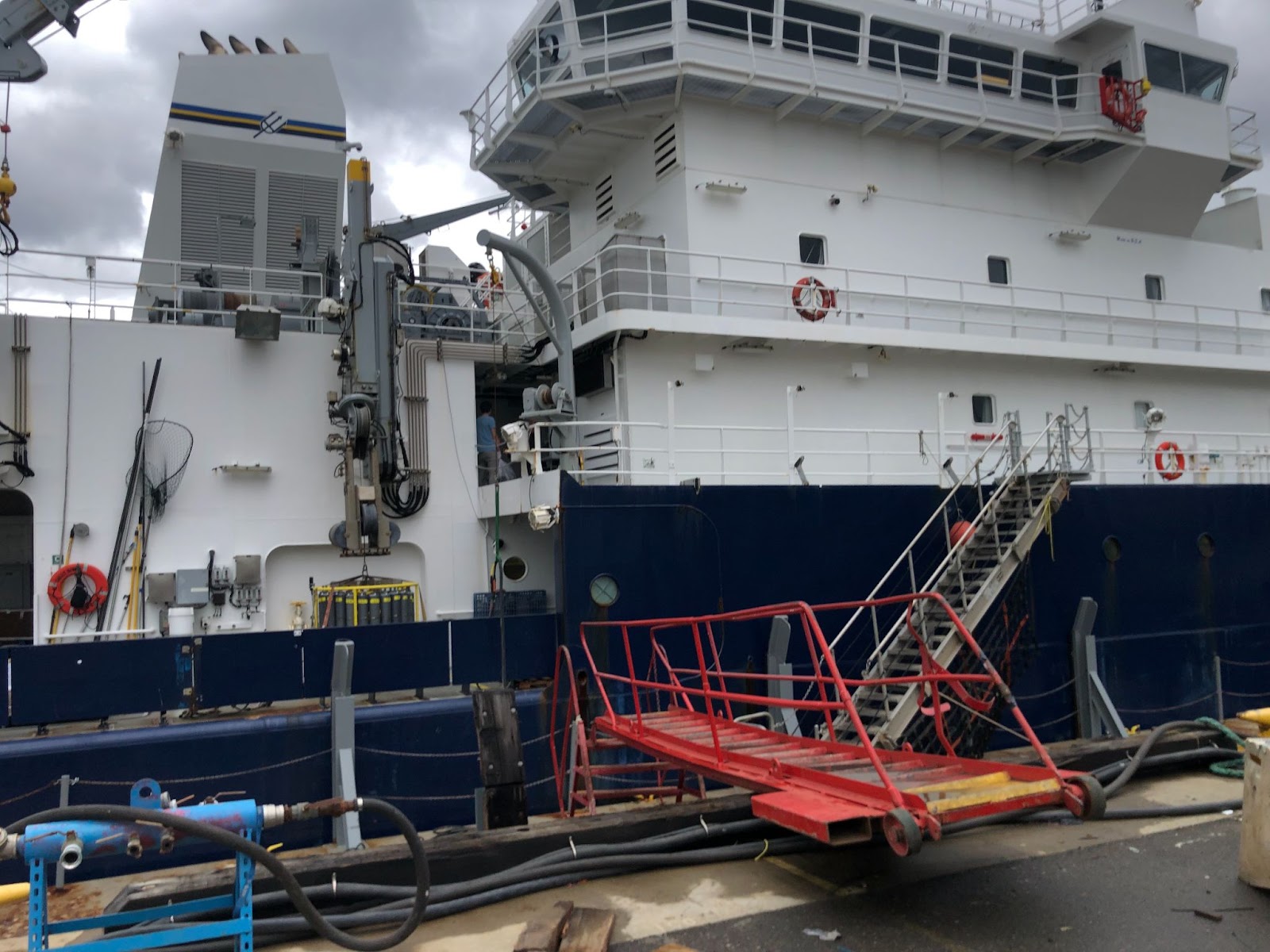
The R/V Sally Ride, docked in Alameda, CA.


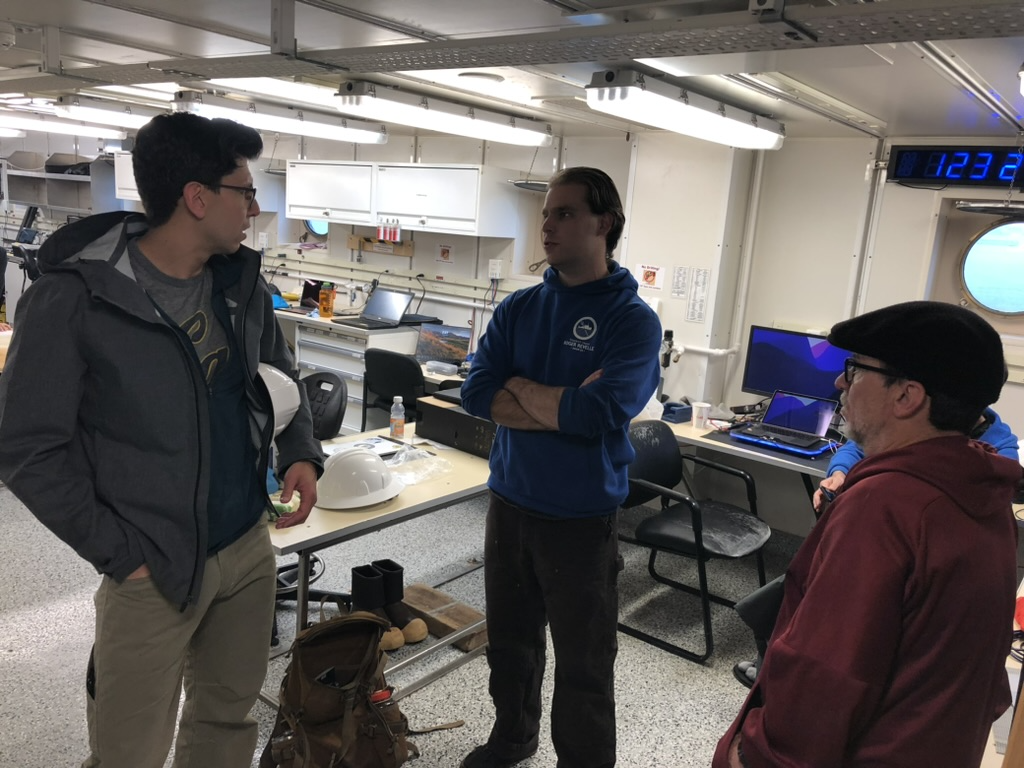
Trusted CI’s Dan Arnold, left, conferring with marine technicians on the R/V Sally Ride.


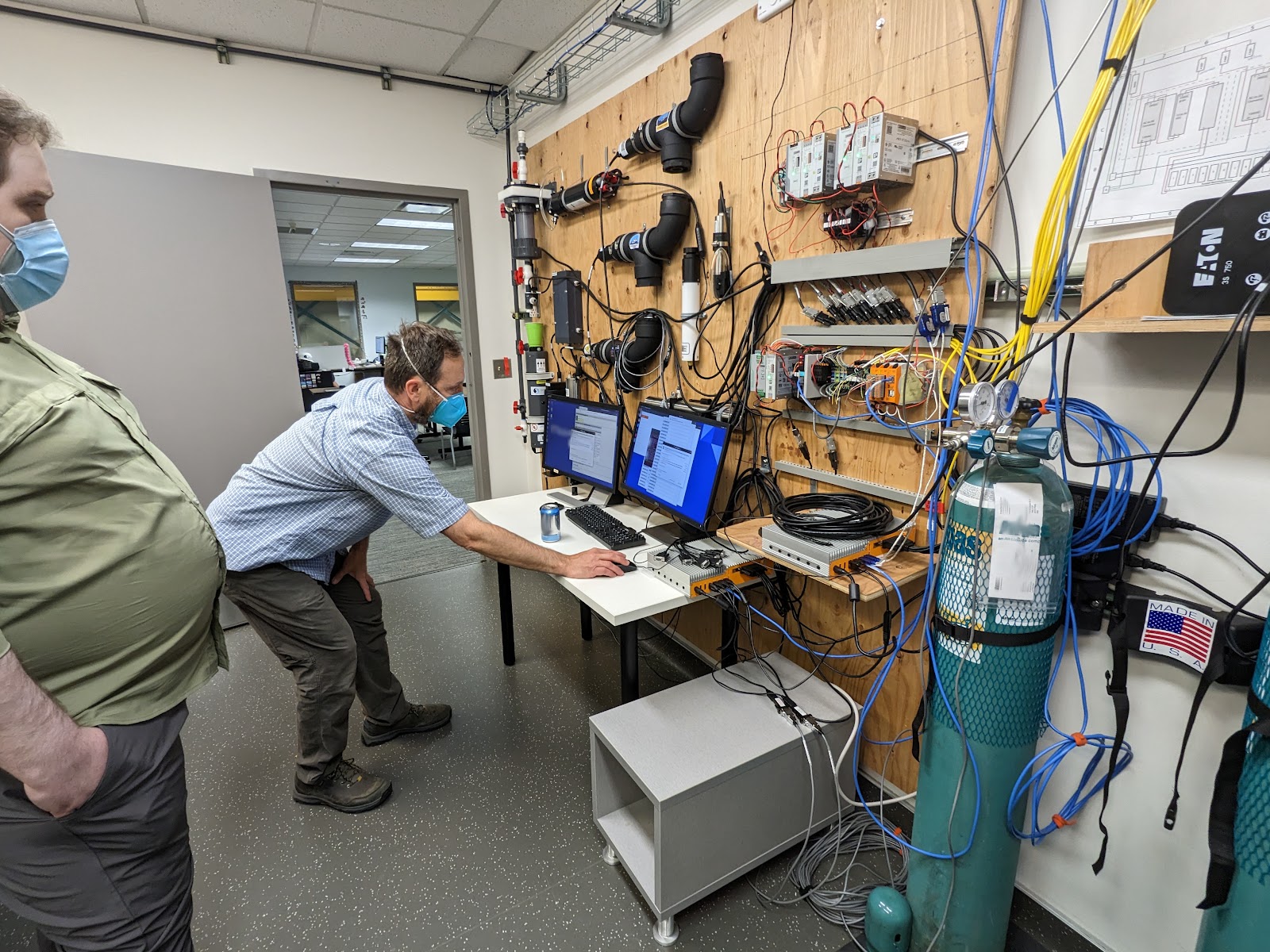
Trusted CI’s John Zage, left, looks on as RCRV’s Chris Romsos, right, explains some of the scientific instruments that will be part of the newly constructed ships at the RCRV’s offices at OSU, Corvallis, OR.


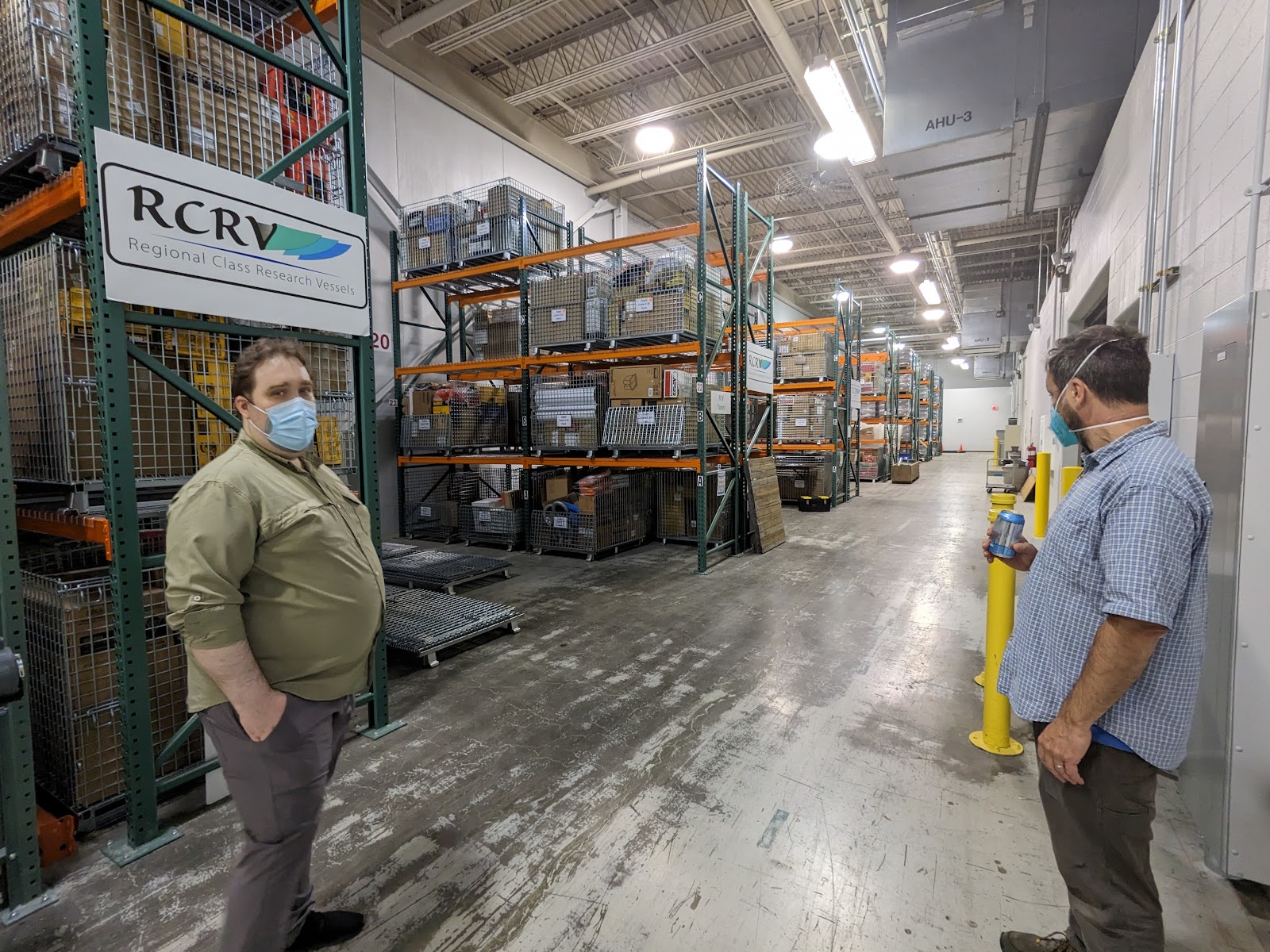
Trusted CI’s John Zage left, and RCRV’s Chris Romsos, right, view part of the expansive warehouse of items and gear to outfit the new ships under construction. OSU, Corvallis, OR.  


Wednesday, January 25, 2023

Announcing the 2023 Trusted CI Annual Challenge: Building Security Into NSF Major Facilities By Design

The Trusted CI Annual Challenge is a year-long project focusing on a cybersecurity topic of importance for scientific computing environments.  In its first year, the Trusted CI Annual Challenge focused on improving trustworthy data for open science.  In its second year, the Annual Challenge focused on software assurance in scientific computing.  In its third year, 2022, the Annual Challenge focused on the security of operational technology in science.  

The 2022 Annual Challenge on the Security of Operational Technology in NSF Scientific Research reinforced the notion that NSF Major Facilities, once constructed, can deploy operational technology that can have an operational lifetime of 15-30 years.  However, there are typically no cybersecurity requirements during acquisition and design.  In the 2023 Annual Challenge, Trusted CI staff will engage with NSF Major Facilities undergoing construction or refreshes in a hands-on way to build security into those Facilities from the outset.  Trusted CI will directly support the planning for facility refreshes and construction with respect to operational technology and will particularly focus on the academic maritime domain, including supporting the acceptance testing of the NSF-funded Research Class Research Vessels (RCRVs) at Oregon State University, supporting the U.S. Antarctic Program (USAP)’s design of the Antarctic Research Vessel (ARV), and Scripps Institution of Oceanography’s design of the California Coastal Research Vessel (CCRV).

This year’s Annual Challenge is supported by a stellar team of Trusted CI staff, including Andrew Adams (Pittsburgh Supercomputing Center), Daniel Gunter (Berkeley Lab), Ryan Kiser (Indiana University), Mark Krenz (Indiana University), Michael Simpson (Indiana University), John Zage (University of Illinois, Urbana-Champaign), and Sean Peisert (Berkeley Lab; 2023 Annual Challenge Project Lead).

Wednesday, November 16, 2022

Publication of the Trusted CI Roadmap for Securing Operational Technology in NSF Scientific Research

Trusted CI is pleased to announce the publication of its Roadmap for Securing Operational Technology in NSF Scientific Research.  

In 2022, Trusted CI conducted a year-long effort examining the security of operational technology in science. Operational technology (OT) encompasses broad categories of computing and communication systems that in some way interact with the physical world.  This includes devices that either have sensing elements or control elements, or some combination of the two, and can include both bespoke scientific instrumentation as well as commercially-produced OT.  In both cases, networked sensors and control systems are increasingly important in the context of science as they are critical in operating Major Facilities.  

Trusted CI’s approach to this effort was to spend the first half of 2022 engaging with NSF personnel and operators of OT at NSF Major Facilities to understand the range of operational practices and evaluate potential deficiencies that lead to vulnerabilities and compromises.  In the second half of 2022, leveraged our insights from the first half to develop a roadmap of solutions to sustainably advance security of scientific operational technology.  The audiences for this roadmap include NSF, NSF Major Facilities, and Trusted CI itself.

In July 2022, Trusted CI published its findings from its study of the security of operational technology in science, conducted in the first half of 2022.  

Emily K. Adams, Daniel Gunter, Ryan Kiser, Mark Krenz, Sean Peisert, Susan Sons, andJohn Zage. “Findings of the 2022 Trusted CI Study on the Security of Operational Technology in NSF Scientific Research,” July 13, 2022. DOI: 10.5281/zenodo.6828675 https://doi.org/10.5281/zenodo.6828675

Now, with the publication of this roadmap, Trusted CI aims to help NSF operational technology in cyberinfrastructure advance toward solutions.  The full citation for the solutions roadmap is as follows:

Andrew Adams, Emily K. Adams, Dan Gunter, Ryan Kiser, Mark Krenz, Sean Peisert, and John Zage. “Roadmap for Securing Operational Technology in NSF Scientific Research,” November 16 2022. DOI: 10.5281/zenodo.7327987 https://doi.org/10.5281/zenodo.7327987

Trusted CI gratefully acknowledges the many individuals from NSF as well as the following NSF Major Facilities that contributed to the year-long effort that has led to this roadmap: IceCube Neutrino Observatory, NOIRLab, Ocean Observatories Initiative, United States Academic Research Fleet, and the United States Antarctic Program.

In 2023, Trusted CI will turn its focus toward working closely with several maritime-centric NSF Major Facilities and Major Research Equipment and Facilities Construction (MREFC) projects to offer guidance and recommendations  for integrating operational technology security into those facilities for planning, design, and construction of new and refreshed facilities and instrumentation therein.


Friday, July 15, 2022

Findings of the 2022 Trusted CI Study on the Security of Operational Technology in NSF Scientific Research

This year, Trusted CI is conducting a year-long effort on the security of operational technology in science. Operational technology (OT) encompasses broad categories of computing and communication systems that in some way interact with the physical world.  This includes devices that either have sensing elements or control elements, or some combination of the two.  Networked sensors and control systems are increasingly important in the context of science as they are critical in  operating scientific instruments.  Trusted CI is pleased to share its findings from this study, published in the following report:

Emily K. Adams, Daniel Gunter, Ryan Kiser, Mark Krenz, Sean Peisert, Susan Sons, and John Zage. “Findings of the 2022 Trusted CI Study on the Security of Operational Technology in NSF Scientific Research,” July 13, 2022. DOI: 10.5281/zenodo.6828675  https://doi.org/10.5281/zenodo.6828675

In support of this study, Trusted CI gratefully acknowledges the many individuals from the following NSF Major Facilities that contributed to this effort: IceCube Neutrino Observatory, NOIRLab, Ocean Observatories Initiative, and the United States Academic Research Fleet.

Now that Trusted CI has finished its examination of the current state of the security of OT in science, it will turn its focus to developing a roadmap of solutions to sustainably advance security of scientific operational technology, which will be published in late 2022.

Tuesday, December 20, 2016

US Antarctic Program/CTSC Report Identifies InfoSec Opportunities

CTSC and the National Science Foundation’s Office of Polar Programs have wrapped up an engagement focused on the United States Antarctic Program (USAP) processes and policies relevant to polar science information security. CTSC produced a report focused on the present state of infosec integration and opportunities for improvements, entitled “Integrating Information Security into USAP’s Science Project Lifecycle”. During the course of the engagement, CTSC reviewed over 110 artifacts and interviewed four representatives of polar science projects and facilities. Additionally, CTSC and USAP held 12 calls with NSF and Leidos staff.

This engagement presented a unique opportunity for CTSC to engage directly with the people and program that facilitates all US science in Antarctica. The CTSC team approached this engagement from the viewpoint of PIs, researchers, and grantee personnel, mapping their experience integrating with USAP’s processes and infrastructure. The report included a factual summary of information security information provided in various phases from proposal to deployment to the ice; opportunities for improvement; and potential areas for future collaborations. The opportunities ranged from event timing, clarification and usability, and improved information security for the science projects. CTSC provided appendices listing the artifacts reviewed, a detailed event timeline from the grantee point of view, and detailed comments on selected artifacts.

Antarctica is an incredibly important and challenging environment for science and the use of technology. Its remoteness and harsh environment stretches the boundaries of where the Internet and other utilities we take for granted can reach and function. The logistics of moving people and technology from hundreds of different institutions on and off the ice is challenging, indeed. CTSC engagement team was honored to have the opportunity to learn about the polar science process and talk to some of the people who make it happen. We hope the report is a valuable input.

In its immediate post-engagement evaluation, USAP selected the following areas where the engagement helped improve cybersecurity: “Communication of risks to decision-makers and stakeholders”; “Increased cybersecurity knowledge among staff and personnel.”

NSF manages the USAP to enable NSF-funded polar research carried out by grantees at colleges and universities nationwide. Within NSF Office of Polar Programs, the Antarctic Infrastructure and Logistics Section (AIL) manages the support systems for the field science, primarily through the Antarctic Support Contractor, Leidos. These functions include station operations, logistics, information technology, construction, and maintenance. USAP has a goal of maximizing grantees’ effective integration of information security planning and implementation into that lifecycle.

For more information regarding the engagement deliverables, please contact Tim Howard, USAP Information Security Manager, tghoward@nsf.gov.

Tuesday, October 11, 2016

United States Antarctic Program Begins Engagement With CTSC

The United States Antarctic Program (USAP) supports polar research by providing or managing, among other things, physical, communications, and information infrastructure.  Within NSF's Division of Polar Programs (PLR), the Antarctic Infrastructure and Logistics Section (AIL) manages the USAP.  NSF polar grantees (whether large or small in budget or complexity) interact with a proposal, funding, and logistical lifecycle that is complex due to, among other things, the relative isolation in harsh environmental conditions. USAP desires to maximize grantees’ smooth integration of information security planning and implementation into that lifecycle.  

USAP and CTSC have begun an engagement to analyze the processes within the science project lifecycle, and to produce a report. The report will focus on the present integration of USAP’s information security requirements with the funding lifecycle and polar-specific process and project milestones.

The primary long-term goal for this engagement is to positively impact the efficiency and effectiveness with which NSF polar grantees integrate USAP’s information security requirements into their interactions with USAP information resources. The engagement will run through December 2016.