Showing posts with label Trusted CI. Show all posts

Tuesday, May 5, 2026

Meet the 2026 Trusted CI Scholars: Becoming the Next Generation of Cybersecurity Leaders

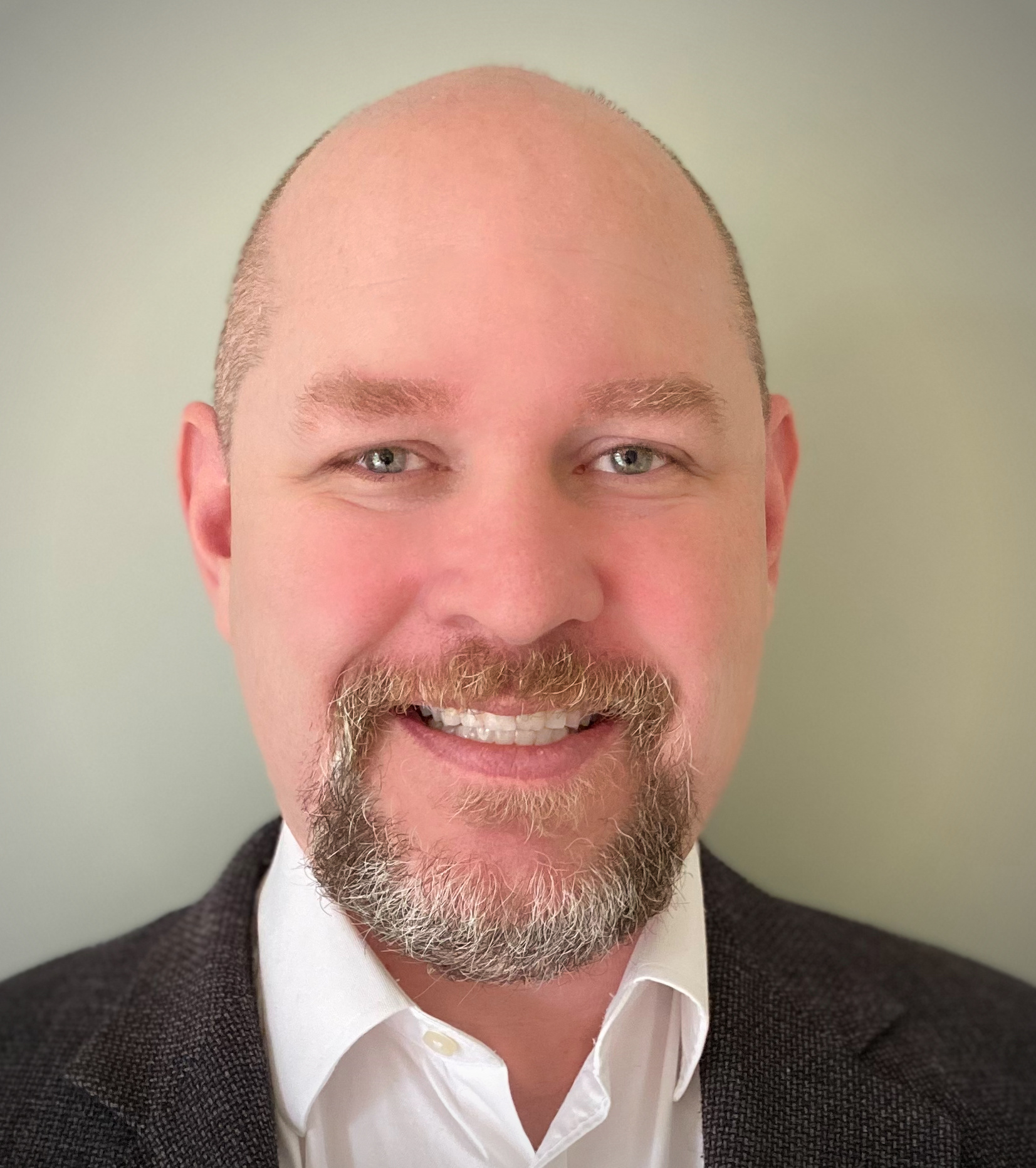
We are proud to introduce the 2026 Trusted CI Scholars, a group of talented undergraduate and graduate students committed to securing our digital future: Bennie Ferguson, Simon Araneda, Nolan Koch, Waratchaya Luangphairin, and Jessica Wooley.


The Trusted CI Scholars Program is more than just a training initiative; it is a gateway for emerging cybersecurity professionals to immerse themselves in the frontlines of digital defense. By providing hands-on experience and direct mentorship from the nation’s leading cybersecurity experts, we aim to equip these students with the tools necessary to build a secure and resilient digital ecosystem. 


Please join us in welcoming our  2026 Trusted CI Scholars.


From May through October, our scholars will engage in a rigorous curriculum designed to bridge the gap between academic theory and professional practice. The program includes bi-monthly webinars led by cybersecurity experts, along with opportunities for collaboration, mentorship, and applied learning. 


Thursday, July 10, 2025

Applications are now open for the 2025 Trusted CI Fellowship!


We’re excited to announce that applications are now open for the 2025 Trusted CI Fellowship. This is your chance to receive expert training, work closely with Trusted CI members, and further empower the NSF community to secure its own research.

Click here to learn more about the Fellows program and to view our past Fellows

Click here to apply for the program

The application deadline is Thursday, July 31, 2025

Trusted CI’s past Fellows have been an amazing success with 35 Fellows from various fields, including:

Research Technologies
Astrophysics
Criminal Justice
Network and Combinatorial Optimization
and Computer Engineering

Fellowship Benefits:
  • Participation in Virtual Cybersecurity Institute Training Workshops
  • Receive funding to attend the 2025 NSF Cybersecurity Summit
  • Access to Trusted CI staff and other Cybersecurity professionals

Participation in the Fellows program will occur from October 2025 to April 2026.


Thursday, October 3, 2024

Cybersecurity Center of Excellence Receives Five-Year, $6M/Year Award From NSF

The U.S. National Science Foundation has awarded Trusted CI, the NSF Cybersecurity Center of Excellence, a five-year, $6-million per-year award to run through September 2029. Lawrence Berkeley National Laboratory (Berkeley Lab) will now serve as Trusted CI’s central steward.

Trusted CI empowers trustworthy discovery and innovation funded by NSF by partnering with cyberinfrastructure (CI) operators to build and maintain effective cybersecurity programs that secure the progress of NSF-funded research. The center started in 2012 and consists of a multi-institutional, cross-functional team that addresses the complex challenges facing the NSF’s cyberinfrastructure research ecosystem. 

Read more in the press release.

To learn more about the Trusted CI Framework, the NSF Cybersecurity Summit, regional Summits, and Trusted CI’s other activities and resources, please read this expanded announcement and learn more on expanded announcement.

Monday, August 5, 2024

Registration is open for the 2024 NSF Cybersecurity Summit!

Registration is open for the 2024 NSF Cybersecurity Summit! Please join us at Carnegie Mellon University in Pittsburgh, PA from October 7-10. If you are unable to join in person, please register to join virtually instead. Attendees will include cybersecurity practitioners, technical leaders, and risk owners from within the NSF Major Facilities and CI community, as well as key stakeholders and thought leaders from the broader scientific and cybersecurity communities. The Summit provides a forum for National Science Foundation (NSF) funded scientists, researchers, cybersecurity, and cyberinfrastructure (CI) professionals, and stakeholders to develop a community and share best practices. The Summit will offer attendees training sessions and workshops with hands-on learning of security tools, security program development, and compliance for research. 

Please register by September 20. 

Thank you on behalf of the Program and Organizing Committees. We look forward to seeing you there!


Wednesday, April 3, 2024

Tapis more secure following Trusted CI code-level review

Trusted CI has published a new success story on its collaboration with Tapis. In 2023, the Texas Advanced Computing Center engaged Trusted CI, the NSF Cybersecurity Center of Excellence, to assess the security of its Tapis software. Applying First Principles Vulnerability Assessment methodology, the Trusted CI team found four serious security vulnerabilities and one bug in the Tapis code and made several recommendations to improve Tapis’ security. 

Monday, November 6, 2023

Trusted CI members help Indiana local governments prevent cyber attacks

Trusted CI’s Craig Jackson and Ranson Ricks are leading an effort, called Cybertrack, to help local Indiana governments prevent cyber attacks. Cybertrack was initiated by the Indiana Office of Technology in partnership with cybersecurity experts from Indiana University and Purdue.

To accomplish this, they are relying on the Trusted CI Framework, which has been adopted by the state as part of its standard for local government cybersecurity. The Cybertrack team is expected to complete more than 300 assessments by 2026.

Read the full article published by Indiana University

Friday, September 8, 2023

Registration is open for the 2023 NSF Cybersecurity Summit!

Registration is open for the 2023 NSF Cybersecurity Summit! Please join us at the Lawrence Berkeley National Laboratory in Berkeley, CA from October 23-26. If you are unable to join in person, please register to join virtually instead. Attendees will include cybersecurity practitioners, technical leaders, and risk owners from within the NSF Major Facilities and CI community, as well as key stakeholders and thought leaders from the broader scientific and cybersecurity communities. The Summit provides a forum for National Science Foundation (NSF) funded scientists, researchers, cybersecurity, and cyberinfrastructure (CI) professionals, and stakeholders to develop a community and share best practices. The Summit will offer attendees training sessions and workshops with hands-on learning of security tools, security program development, and compliance for research. 

Due to site access requirements, registration is required by September 29.  Later registration cannot be accommodated.  Please register by September 29. 

Thank you on behalf of the Program and Organizing Committees. We look forward to seeing you there!


Wednesday, August 2, 2023

Feedback Requested on Trusted CI Five-Year Strategic Plan

NSF cyberinfrastructure is an engine of scientific research and innovation and underlies much of the science that Major Facilities enable. Key cyberinfrastructure components, including supercomputers, data repositories, sensor arrays, ships, software systems, and telescopes, are essential to scientific productivity, such that cybersecurity incidents can have a major impact on the scientific enterprise. For the cyberinfrastructure operators, implementing effective cybersecurity programs for these unique components is a complex challenge.

Trusted CI, the NSF Cybersecurity Center of Excellence (CCoE), has been working to overcome this challenge for over ten years. Its success has been noted both by the NSF community and the former director of the NSF Office of Advanced Cyberinfrastructure. The 2021 JASON Report on Cybersecurity at Major Facilities indicated Trusted CI's demonstrable impact on improving the cybersecurity posture of many NSF Major Facilities.

In light of new and unprecedented challenges facing our community, Trusted CI is making a new strategic plan for the next five years, with a vision of secure operation of essential cyberinfrastructure enabling NSF’s vision of a nation that leads the world in scientific research and innovation. This plan will guide the creation of our renewal proposal.

We are seeking input on our strategic plan from key constituencies including our Advisory Committee and NSF Major Facilities representatives and welcome insights from the broader community as well. Please click the link below to view our five-year strategic plan covering 2024-2029 and provide feedback via email to kelshute@iu.edu. 

https://doi.org/10.5281/zenodo.8193607 

Thank you in advance for your thoughtful feedback and insights!

Tuesday, June 6, 2023

Call for Participation for the 2023 NSF Cybersecurity Summit for Large Facilities and Cyberinfrastructure

 October 24th - 26th ✶ Berkeley, CA

https://trustedci.org/summit/

It is our pleasure to announce that the 2023 NSF Cybersecurity Summit is scheduled to take place the week of October 23rd. Starting with two  full days of trainings and workshops that will be held on Tuesday, October 24th and Wednesday, October 25th. Concluding with a full day of plenary sessions occurring on Thursday, October 26th.

The final program is still evolving, but we will maintain the mission to provide a format designed to increase the NSF community’s understanding of cybersecurity strategies that strengthen trustworthy science: what data, processes, and systems are crucial to the scientific mission, what risks they face, and how to protect them.

About the Summit

Since 2004, the annual NSF Cybersecurity Summit has served as a valuable part of the process of securing the NSF scientific cyberinfrastructure by providing the community a forum for education, sharing experiences, building relationships, and establishing best practices.

The NSF cyberinfrastructure ecosystem presents an aggregate of complex cybersecurity needs (e.g., scientific data and instruments, unique computational and storage resources, complex collaborations) as compared to other organizations and sectors. This community has a unique opportunity to develop information security practices tailored to these needs, as well as break new ground on efficient, effective ways to protect information assets while supporting science. The Summit will bring together leaders in NSF cyberinfrastructure and cybersecurity to continue the processes initiated in 2013: building a trusting, collaborative community and seriously addressing that community’s core cybersecurity challenges.

The Summit seeks proposals for plenary presentations, workshops/trainings, BoFs/project meetings, poster session and student program. 

Proposing Content for the Summit

There are many ways to contribute to the Cybersecurity Summit. We are open to proposals for live plenary presentations, focused workshops/trainings, project meetings and birds of a feather(BoFs). More specific information on each of those is available below. Submissions can be made using this online form https://docs.google.com/forms/d/e/1FAIpQLSc8VJjYj2XmzTxhoeBvQaf2LUCWovOCouMO5XQtdHgBjzOZDA/viewform by June 16, 2023. Responses will be announced by July 14, 2023 to ensure adequate planning time for presenters.

We strongly encourage proposals that address the 2022 Summit themes and challenges such as Framework Adoption, Operational Technology, Preparing for AI, Identity and access management, Compliance challenges and Risk assessment. Additionally, proposals that address topics ranked high by the community are also strongly encouraged/prioritized. These include: 

  1. Human Factors in Cybersecurity
  2. Open Source Software Security
  3. Cloud Security
  4. AI/ML for Security
  5. Trust/Security of AI Tools
  6. Information Asset Management
  7. Supply Chain Attacks
  8. ChatGPT use/banning/enabling for Security
  9. Quantum Computing

Proposing a Plenary Presentation

Please submit brief proposals with a 1-2 page abstract focused on NSF Large Facilities’ unmet cybersecurity challenges, lessons learned, and/or significant successes for presentation during the Summit Plenary Session. Plenary talks are limited to 25 minutes in length including time needed for question and answers if desired. 

Please note that the Summit will offer a ‘hybrid’ model for remote attendees to participate and all plenary talks will be recorded and made available after the event. Proposals should only contain information without sharing restrictions. As a guide, all plenary presentations should be TLP:WHITE “information carries minimal or no foreseeable risk of misuse, in accordance with applicable rules and procedures for public release. Subject to standard copyright rules, TLP:WHITE information may be distributed without restriction.” 

Submission deadline: June 16th, 2023
Proposals can be submitted using this online form: https://docs.google.com/forms/d/e/1FAIpQLSc8VJjYj2XmzTxhoeBvQaf2LUCWovOCouMO5XQtdHgBjzOZDA/viewform
Word limit: 1-2 pages
Notification of acceptance: July 14th, 2023

Proposing a Workshop or Training Session

Continuing this year, the Summit will accept proposals for Workshops and Trainings seeking to build communities of practice related to the NSF CyberInfrastructure. Please submit brief proposals with abstract that includes the intended audience, description of what the workshop or training will cover and expected benefits for attendees. Examples may include table top exercises, focused discussions and activities on techniques and skills in a particular field, and collaborative information sharing among security professionals.

Workshops and Trainings will be scheduled to not overlap with the Plenary sessions. They can be of varying length ranging from one hour to a half day (3.5 hours). Workshops can be limited to a specific audience to provide confidentiality. For workshops that intend to limit participation, proposals should include requirements for attendees. For accepted workshops that have admission requirements, members of Trusted CI along with workshop organizers will review workshop registration requests to ensure they meet attendance requirements. Workshop and training organizers may choose to offer either in-person or a hybrid model to include attendees joining remotely via Zoom. Workshop/training organizers are encouraged to offer hybrid sessions to maximize participation. This includes running the Zoom (e.g., monitoring the chat, unmuting remote participants, etc.). 

Submission deadline: June 16th, 2023
Proposals can be submitted using this online form: https://docs.google.com/forms/d/e/1FAIpQLSc8VJjYj2XmzTxhoeBvQaf2LUCWovOCouMO5XQtdHgBjzOZDA/viewform
Word limit: 1-2 pages
Notification of Acceptance: July 14th, 2023

Birds of a Feather and Project Specific Meeting Proposals

New this year we will be offering Summit attendees to propose Birds of a Feather (BoFs) and Project Specific Meetings. 

Birds of a Feather (BoFs): Informal gatherings of like-minded individuals who wish to discuss a certain topic can be 1-2 hours in length. Proposers of BoF sessions should serve as discussion leaders to explore and address challenges for a specific topic. BoF Proposals should be no more than one page in length and include the proposed topic and description, the activity’s intended audience, and its expected benefits.

Project Specific Meetings: The Summit organizers recognize that the summit attracts many people who work remotely on projects with distributed staff (ACCESS, ESNet, OSG, Zeek, Jupyter).  Attending a conference presents an opportunity for people who work collectively on a shared project to meet in person. This year we have a number of meeting rooms available for projects to hold working sessions. To request a meeting room, please provide a name and description of the project, number of expected participants and meeting duration (1-2 hours suggested). Requests will be reviewed and scheduled based on room availability. 

Submission deadline: June 16th, 2023
Proposals can be submitted using this online form: https://docs.google.com/forms/d/e/1FAIpQLSc8VJjYj2XmzTxhoeBvQaf2LUCWovOCouMO5XQtdHgBjzOZDA/viewform
Word Limit: 1-2 page description
Notification of Acceptance: July 14th, 2023

Poster Proposals

Also new this year we will be offering individuals to present posters in an informal setting. This is an opportunity to disseminate your work with Summit attendees, receive helpful insights and engage others who are interested in the same subject or focus of your work.

To propose a poster, please provide your name, poster title along with an abstract. Details on shipping posters will be provided upon acceptance.

Submission deadline: June 16th, 2023
Proposals can be submitted using this online form: https://docs.google.com/forms/d/e/1FAIpQLSc8VJjYj2XmzTxhoeBvQaf2LUCWovOCouMO5XQtdHgBjzOZDA/viewform
Word Limit: 1-2 page description
Notification of Acceptance: July 14th, 2023

Student Program

To support workforce development, the Summit organizers invite several students to attend the Summit in-person. Both undergraduate and graduate students may apply. No specific major or course of study is required, as long as the student is interested in learning and applying cybersecurity innovations to scientific endeavors.

To be considered, students must submit an application form (link below), answering questions about their field of study and interest in cybersecurity. Up to 10 student applicants will receive invitations from the Program Committee to attend the Summit in-person. Attendance includes students’ participation in a poster session.

Travel and hotel accommodations will be provided. Students whose applications are declined are welcome to attend the Summit remotely.

The deadline for applications is Monday, August 28th at 12 am CDT, with notification of acceptance to be sent by Friday September 8th.

Please discuss attendance with your instructors prior to attending.

We cannot select applications to attend in-person from students who live outside the United States.

Student Application to attend the Summit:
https://forms.gle/wxCRYpD94mCbQ4Rb6
Send questions to students@trustedci.org
Submission deadline: Monday, August 28th at 12 am CDT
Notification of Acceptance: Friday, September 8th

Notes for First-Time Presenters

The Summit organizers want to encourage those who have not presented at previous Summits to share their experiences, expertise, and insights with the NSF cybersecurity community. You don’t need to be perfectly polished, you just need to have something to share about your project or facility's experience with information security. Feedback from past Summits show that there is a great deal of interest in “lessons learned” type presentations from projects who’ve faced cybersecurity challenges and had to rethink some things afterwards. We’ve put together a page of tips and ideas for new presenters, including proposal and presentation tips as well as suggested topics. More direct coaching is available upon request.

Additional Call for Participation (CFP) Guidance

The Summit organizers wish to encourage and support participation from throughout the wider NSF community. To further that mission, we’ve provided some information (below) to aid in the preparation of CFP responses. Please don’t hesitate to direct questions to CFP@trustedci.org.

What to Present

The CFP presents an opportunity for the community to make progress on shared challenges identified in prior summits. The organizers especially appreciate proposals that drive this home; however, not every presentation or activity has to be centered around just that topic. Please submit any idea that you think may be relevant to our audience but note that proposals that address community challenges from prior years will be given higher preference. 

We strongly encourage proposals that address the 2022 Summit findings and topics identified of high interest as outlined above.

How to Build a CFP Response

The proposal you submit will be used in two ways: to tell the organizers about what you plan to present and to be included in the summit findings as a sort of after-action report. It should include:

  1. Session Format: Plenary (Lecture, Panel, Open Format) or workshop
  2. An executive summary/abstract (short description of the topic and content).
  3. Who the presenter(s) is/are.
  4. Either an abstract of the topic or a narrative you’d like to share with the community. (For activities that are not plenary sessions, this may be replaced with a description of the planned activity and the activity’s intended audience.)
  5. Contact information (preferably email) for the presenter(s) in case the organizers have any questions. This can be in a separate note in the email body instead of the proposal itself if presenter(s) don’t wish it to be published.
  6. Expected length of the session/activity. All plenary sessions will be limited to 25 minutes, Workshops and Trainings can range from one to 3.5 hours. BoFs and Project specific meetings are suggested to run 1-2 hours.
  7. Intended audience and expected benefits of the proposal

Our community has expressed in the past that many find it helpful if they can download a copy of a presentation’s slides. Therefore we will require all presenters to submit their slides in advance of the summit. 

The easiest way to get help/feedback from the organizing committee prior to submitting your final proposal is to create a Google Doc containing your proposal and sending an edit link to CFP@trustedci.org

Tips for Presenting

There are many different presentation formats that can work well depending on the topic. Consider the following:

  1. Lecture format: The presenter(s) talk to the audience and show slides to support their dialogue, then do a short Q&A session at the end of the presentation.
  2. Panel format: 3-5 persons answer questions offered by a moderator on a specific topic or set of topics, then do a short Q&A with the audience. This tends to work out best when the panel contains people with very different backgrounds or viewpoints, and the moderator is good at keeping folks to the topic and time constraints.
  3. Open Forum format: 2-3 persons answer questions offered by the audience. Works best if there is an extra person gathering questions and presenting them, and if the speakers can keep things succinct so that the presentation keeps moving and many questions get answered.
  4. Hands-on format(workshops/trainings): The presenter(s) walk the audience through a demo or tutorial as the audience follows along on their computers (or on paper, if the topic supports it).  If you are doing a training that will have many hands-on activities, consider having more than one presenter, or a presenter plus a helper or two who can go around the room and help participants who get stuck, allowing the group as a whole to move on.

Tuesday, March 21, 2023

SAVE THE DATE: Announcing the 2023 NSF Cybersecurity Summit, Oct 24-26, 2023 in Berkeley, CA

Please mark your calendars for the 2023 NSF Cybersecurity Summit  planned for 3 full days, October 24-26 at the Lawrence Berkeley National Laboratory, in Berkeley, CA.

Trusted CI is welcoming other groups to schedule events the week of October 23rd around the Summit that may be of interest to our community. For planning purposes you may want to reserve the full week to attend these meetings. More details will be shared as planning progresses.


Stay tuned for more information by following the Trusted CI Blog or our Announcement email list for more updates.


On behalf of Trusted CI


Monday, March 13, 2023

Announcing the 2023 Trusted CI Open Science Cybersecurity Fellows

Trusted CI, the NSF Cybersecurity Center of Excellence, is excited to announce the Trusted CI Open Science Cybersecurity Fellows. Seven individuals with professional interests in cybersecurity have been selected from a nationally competitive pool. During the year of their Fellowship, they will receive recognition and cybersecurity professional development including training and travel funding to cybersecurity related events.

The 2023 Trusted CI Open Science Cybersecurity Fellows are:

Ramazan S. Aygun

Director of Center for Research Computing at Kennesaw State University

Ramazan S. Aygun is the Director of Center for Research Computing at Kennesaw State University and Associate Professor of Computer Science with joint appointment at the School of Data Science and Analytics.  He has published more than 130 refereed international journal papers, conference papers and book chapters in various aspects of data science including big data computing, machine learning, multimedia forensics, data mining, data modeling, data communications, data compression, data presentation, data retrieval, data indexing, data querying, and data fusion. His most recent work includes trustworthy machine learning and developing fair and explainable machine learning models by studying possible bias in the datasets. He is recently leading NSF funded project titled “CC* Data Storage: High Volume Data Storage Infrastructure for Scientific Research and Education at Kennesaw State University Shared as Open Science Data Federation Data Origin.” Dr. Aygun served as a program co-chair of IEEE International Symposium on Multimedia in 2012 and 2018. He has also served on the organization and program committees of more than 60 conferences and workshops. He is also serving as an Associate Editor of IEEE Transactions on Multimedia. He is a co-author of the book titled Data Analytics for Protein Crystallization.


Phuong Cao

Research Scientist at the Cybersecurity Division at the National Center for Supercomputing Applications (NCSA) at the University of Illinois at Urbana-Champaign 

Phuong Cao is a Research Scientist at the Cybersecurity Division at the National Center for Supercomputing Applications (NCSA) at the University of Illinois at Urbana-Champaign. His research mission is to secure cyberinfrastructure, in particular high performance scientific computing, e.g., Blue Waters supercomputer. He has a broad interest in security, with a multidisciplinary focus on Internet-scale measurements of operational systems, deep measurement driven analytics using probabilistic graphical models, ML/AI-driven honeypot for early attack response, and machine assisted proofs of federated authentication protocols. Prior to joining NCSA, he has had hands-on experience in the network security industry, including reverse engineering of polymorphic computer viruses, responding to globally distributed denial of service attacks (Akamai’s CDN, LinkedIn), securing the Watson Health Cloud (IBM z Systems), and formal verification of smart contracts and OAuth protocols (Microsoft).


Nick Harrison

Information Security Officer for the North Carolina Community College System

Nick Harrison is an Information Security Officer for the North Carolina Community College System, where he helps staff and faculty provide secure technical solutions for the next generation of the nation's workforce. Prior to joining the Community College system, Nick was the Director of Advanced Cyberinfrastructure Services at the Renaissance Computing Institute. He has over twenty years of IT experience in higher education and enjoys learning about cloud and virtualization technologies.


Lori Sussman

Assistant Professor of Technology and Cybersecurity at the University of Southern Maine.

Lori Sussman, Ed.D., is an Assistant Professor of Technology and Cybersecurity at the University of Southern Maine. She was part of the fourth class at the United States Military Academy to admit women and is a West Point graduate. Lori retired from the U.S. Army as a highly decorated colonel. Her military leadership experiences include 15th Regimental Signal Brigade Commander, 2nd Infantry Division Battalion Commander/CIO/G-6, Presidential Communications Officer, Joint Staff J-6 Executive Officer, and Assistant to the Army Chief of the Staff, as well as numerous demanding tactical assignments. Upon leaving service, Dr. Sussman worked in large and small companies, notably Cisco Systems and Hewlett Packard Enterprise (HPE). She is also an entrepreneur, having created several consulting businesses. In these varied roles, Dr. Sussman has managed a spectrum of highly complex organizations engaged in developing, integrating, deploying, and sustaining state-of-the-art technology and security solutions for clients. The Epsilon Pi Tau Technology Honor Society Awarded Dr. Sussman with the Warner Minilecture Award in 2020 and 2021 for her research about Cybersecurity Ambassadors. These individual awards followed recognition by the National Cyberwatch Center as the 2021 Most Innovative Cybersecurity Education Initiative. In 2021, Governor Mills named Dr. Sussman one of eleven veteran aides-de-camp. Her research areas include cybersecurity education, cybersecurity training and awareness, gender equity in technology and cybersecurity, and technology and cybersecurity leadership.


Dr. Gary Rogers

HPC Systems Administrator for the National Institute for Computational Sciences (NCIS) at the University of Tennessee

Dr. Gary Rogers earned his PhD in Computer Science from the University of Tennessee, while starting his career at the National Institute for Computational Sciences. He has over 18 years of HPC experience, many of those as an HPC administrator on some of the fastest supercomputers in the world. He played a key role in the national cyberinfrastructure projects, XSEDE and XSEDE 2.0, as the manager of the System and Operations Support group. He also participated in the XSEDE 2.0 Cybersecurity group, as well as the XSEDE Development Coordination Council. His current interests include developing and deploying secure compute platforms on which sensitive data can be analyzed, while reducing the barrier of entry for researchers to access and use such a platform. He holds an MS in Computer Science from the University of Tennessee, as well as a BS in Computer Science from the University of the South (Sewanee).  


David White

Parks, Recreation, and Tourism Management research professor at Clemson University

David White is a Parks, Recreation, and Tourism Management research professor at Clemson University. He is a Geographic Information Systems (GIS) expert with over twenty-five years in mapping, analytics, and spatial data collection. His most recent work uses mobility data to study visitation behavior in parks and protected areas. Additionally, his research has included several projects developing enterprise data and information systems requiring spatial data visualization and analytics. He holds a Ph.D. in Marine Science from the University of South Carolina.


Andrew Ferbert

Platform Services manager at the San Diego Supercomputer Center (SDSC) at UC San Diego (UCSD).

Andrew Ferbert is the Platform Services manager at the San Diego Supercomputer Center (SDSC) at UC San Diego (UCSD). Andrew’s primary responsibility is supporting SDSC and UCSD researchers through managed systems, operational support, and production systems integration. Throughout his career at SDSC, Andrew has never shied away from challenges and has worked in a variety of roles including desktop support, datacenter physical security, systems administration within HIPAA and FISMA projects, and working on projects with various branches of the United States Armed Force.

Thursday, February 16, 2023

Call for Trusted CI Framework Cohort Participation - Response due 24 March 2023


The Framework Cohort is a six month, group engagement aimed at facilitating adoption and implementation of the Trusted CI Framework among NSF Major Facilities, Mid-scales, and research cyberinfrastructure (CI) providers. During the engagement, members of the cohort will work closely with Trusted CI toward implementing the Trusted CI Framework at their facility, emerging with a validated assessment of their cybersecurity program and a strategic plan detailing their path to fully implement each Framework Must. Cohort members will participate in six monthly workshops (lasting three hours each) and spend no more than eight hours each month outside of the workshops on cohort assignments. The fourth cohort will meet from July 2023 through December 2023.

 Since January 2022, almost 70 percent of NSF’s Major Facilities (MFs) have completed a cohort engagement or are currently participating in a cohort. These MFs include ARF, GAGE, IceCube, LIGO, NEON, NOIRLab, NRAO, NSO, OOI, SAGE and USAP. Additionally, NSF’s Mid-scales FABRIC, Network for Advanced NMR (NAN) and Deep Soil Ecotron (DSE); and the Corporation for Educational Network Initiatives in California (CENIC) and Giant Magellan Telescope (GMTO) are cohort participants. 

NSF Major Facilities and Mid-scales  providers wishing to participate in the next Framework cohort engagement should respond to the call by completing the form at the bottom of this page: https://www.trustedci.org/call-for-trusted-ci-framework-cohort  Your response is appreciated by Friday, March 24, 2023.

Friday, November 18, 2022

Deadline extended until Friday Dec. 2- Trusted CI 2023 Fellows Program Application

 We are now pleased to announce the call for applications for our 2023 Trusted CI Fellows.

Another cohort of six Fellows will receive training from and work closely with Trusted CI to expand their own understanding of trustworthy science and further empower the NSF community to secure its own research.

Applications are now open for the 5th round of Trusted CI Fellows! You can learn more about our Fellows program by visiting our website..

The deadline for applications is Friday, Dec 2. Click here to apply for the program.
Trusted CI’s first three cohorts of Fellows have been an amazing success with twenty Fellows from various fields, including:

  • Research technologies
  • Astrophysics
  • Criminal justice
  • Network and combinatorial optimization 
  • and computer engineering. 

Click here to view our 201920202021, and 2022 Fellows


Friday, October 21, 2022

Trusted CI 2023 Fellows Program Application is open

We are now pleased to announce the call for applications for our 2023 Trusted CI Fellows.


Another cohort of six Fellows will receive training from and work closely with Trusted CI to expand their own understanding of trustworthy science and further empower the NSF community to secure its own research.

Applications are now open for the 5th round of Trusted CI Fellows! You can learn more about our Fellows program by visiting our website..

The deadline for applications is Friday Nov 18th . Click here to apply for the program.
Trusted CI’s first three cohorts of Fellows have been an amazing success with twenty Fellows from various fields, including:
  • Research technologies
  • Astrophysics
  • Criminal justice
  • Network and combinatorial optimization 
  • and computer engineering. 
Click here to view our 2019 , 2020, 2021 and 2022 Fellows

Friday, September 30, 2022

Trusted CI at 2022 NSF Research Infrastructure Workshop in Boulder

Earlier this month, members of Trusted CI presented a workshop at the NSF 2022 Research Infrastructure Workshop in Boulder, Colorado. 

The Research Infrastructure Workshop was a four-day event on safety, cyberinfrastructure, cybersecurity, and science communication. The hybrid event included a poster session, social gatherings, site tours of NCAR’s Research Aviation Facility, GAGE, and NEON, and virtual ice breaker and speed dating sessions to facilitate networking opportunities for everyone. Several members of Trusted CI attended the multi-day event, making new connections with operational and senior leadership at major facilities, midscale facilities, and the NSF.

Our workshop on Friday targeted cyber security officers and focused on the JASON advisory report on Cybersecurity at NSF Major Facilities, cybersecurity guidelines in the Research Infrastructure Guide (RIG), a panel on building a cybersecurity program using the Trusted CI Framework, ransomware, and how the ResearchSOC supports NSF major facilities.

Representatives from the NSF, NRAO, OOI, GAGE, and the ResearchSOC presented and participated during the workshop. We thank Craig Risien (OOI), Wade Craig (NRAO), and Doug Ertz (GAGE) for participating in the Framework panel.

Trusted CI’s partner, CI Compass, led a cyberinfrastructure workshop earlier in the day that included panels on data management and workforce development.

We are grateful to the event organizers for giving us the opportunity to present, as well as meeting with our community members, both online and in-person.

Slides and videos from the event will be posted to the NSF Research Infrastructure Knowledge Sharing Gateway when they become available.


Trusted CI's Jim Basney and NSF's Jim Ulvestad
NSF's Robert Beverly
Trusted CI's Scott Russell
Framework panel

Trusted CI's Ryan Kiser
ResearchSOC's Susan Sons


Friday, July 29, 2022

Trusted CI Co-authors Identity Management Cookbook for NSF Major Facilities

Trusted CI’s Josh Drake has co-authored a new document addressing many identity management (IdM) challenges present at NSF Major Facilities. Due to their size and collaborative missions, Major Facilities often have many users, across multiple organizations, all with different access permissions to a diverse collection of CI resources. The Federated Identity Management Cookbook aims to address these challenges by providing time-tested “recipes” for building IdM capabilities, as well as a primer on the topic of IdM itself.

“While operating the IdM working group and CI Compass, we had many opportunities to engage with major facilities on identity and access management issues facing researchers. We were able to explore a variety of options to help researchers integrate federated identities into their cyberinfrastructure,” said Josh Drake. “This cookbook represents the distilled version of months of engagement with the MF community and a primer to identity management concepts that we hope will be of use to research cyberinfrastructure operators everywhere.” Trusted CI’s Ryan Kiser and Adrian Crenshaw also participated in the engagements that contributed to the cookbook.

This work was created in partnership with Erik Scott (RENCI) and CI Compass. CI Compass provides expertise and active support to cyberinfrastructure practitioners at NSF Major Facilities in order to accelerate the data lifecycle and ensure the integrity and effectiveness of the cyberinfrastructure upon which research and discovery depend.

The cookbook is available in the CI Compass Resource Library  and on Zenodo. See CI Compass’s website to read the full press release.

Thursday, June 30, 2022

Trusted CI co-PI Bart Miller wins award for landmark paper on dependable computing

Bart Miller, Trusted CI co-PI, and his two student co-authors were honored with the 2022 Jean-Claude Laprie Award in Dependable Computing on June 28 in Baltimore, Md. Miller, along with L. Fredriksen, and B. So, were presented the award during the opening session of the Annual IEEE/IFIP International Conference on Dependable Systems and Networks.

The groundbreaking paper, “An Empirical Study of the Reliability of UNIX Utilities," published in 1990, launched the field of fuzz random testing, or fuzzing as it is commonly called. The paper created a new technique for easy-to-use software testing and then used that technique to evaluate UNIX utilities crashes. As part of this research, the authors also studied the root causes of the failures. They also released its code and data openly (a novelty at that time). The paper has been cited more than 1,300 times and was responsible for creating an entire new branch of testing and security research. Hundreds of papers and tens of PhD dissertations are produced each year in this area.

Today, fuzzing is taught in introductory software testing and security courses, is a prominent area of focus at numerous conferences, and is recognized by major companies. For example, Microsoft recently published a paper on how they integrate fuzzing in the life cycle of almost all their products. Similarly, Google recently reported that 80 percent of the bugs they find in production in the Chrome web browser are due to fuzzing. 

Fuzzing is heavily used in security research and is often the tool of choice for penetration testers. Thus, this paper has important implications for reliability and security research.

About Bart Miller

Bart Miller with his Cessna TR182 that he bought in 1980. He's had his commercial pilots license since 1979. 

Barton Miller is the Vilas Distinguished Achievement Professor at the University of Wisconsin-Madison. Co-PI on Trusted CI, where he leads the software assurance effort. Research interests include software security, in-depth vulnerability assessment, and binary code analysis. In 1988, Miller founded the field of fuzz random software testing, a foundation of many security and software engineering disciplines. In 1992, Miller and his then­-student Jeffrey Hollingsworth founded the field of dynamic binary code instrumentation and coined the term “dynamic instrumentation.” Miller is a Fellow of the ACM.

About the Jean-Claude Laprie Award in Dependable Computing

The award was created in 2011, in honor of Jean-Claude Laprie (1944-2010), whose pioneering contributions to the concepts and methodologies of dependability were influential in defining and unifying the field of dependable and secure computing. The award recognizes outstanding papers that have significantly influenced the theory and/or practice of dependable computing.

About IFIP WG 10.4 on Dependable Computing and Fault Tolerance

IFIP Working Group 10.4 was established in 1980 with the aim of identifying and integrating approaches, methods, and techniques for specifying, designing, building, assessing, validating, operating, and maintaining dependable computer systems (those that are reliable, available, safe, and secure). Its 75 members from around the world meet twice a year to conduct in-depth discussions of important technical topics to further the understanding of the fundamental concepts of dependable computing.

About the International Federation for Information Processing

IFIP is a non-governmental, non-profit umbrella organization for national societies working in the field of information processing. It was established in 1960 under the auspices of UNESCO as a result of the first World Computer Congress held in Paris in 1959. It is the leading multinational, apolitical organization in Information and Communications Technologies and Sciences.