Thursday, September 27, 2018

Student Program at the 2018 NSF Cybersecurity Summit

In August we hosted our annual NSF Cybersecurity Summit for Large Facilities and Cyberinfrastructure in Alexandria, VA. The Summit included training workshops, plenary talks, and networking opportunities for members of NSF Large Facilities and the CI community.

As Summit attendance and funding grows so has our ability to provide learning opportunities for new members to the community. Last year we launched a student scholarship program to follow through on our goals of outreach and broadening impact. Students apply to the program by sharing their resumes and a brief essay sharing their security interests and what they hope to gain from attending the Summit.

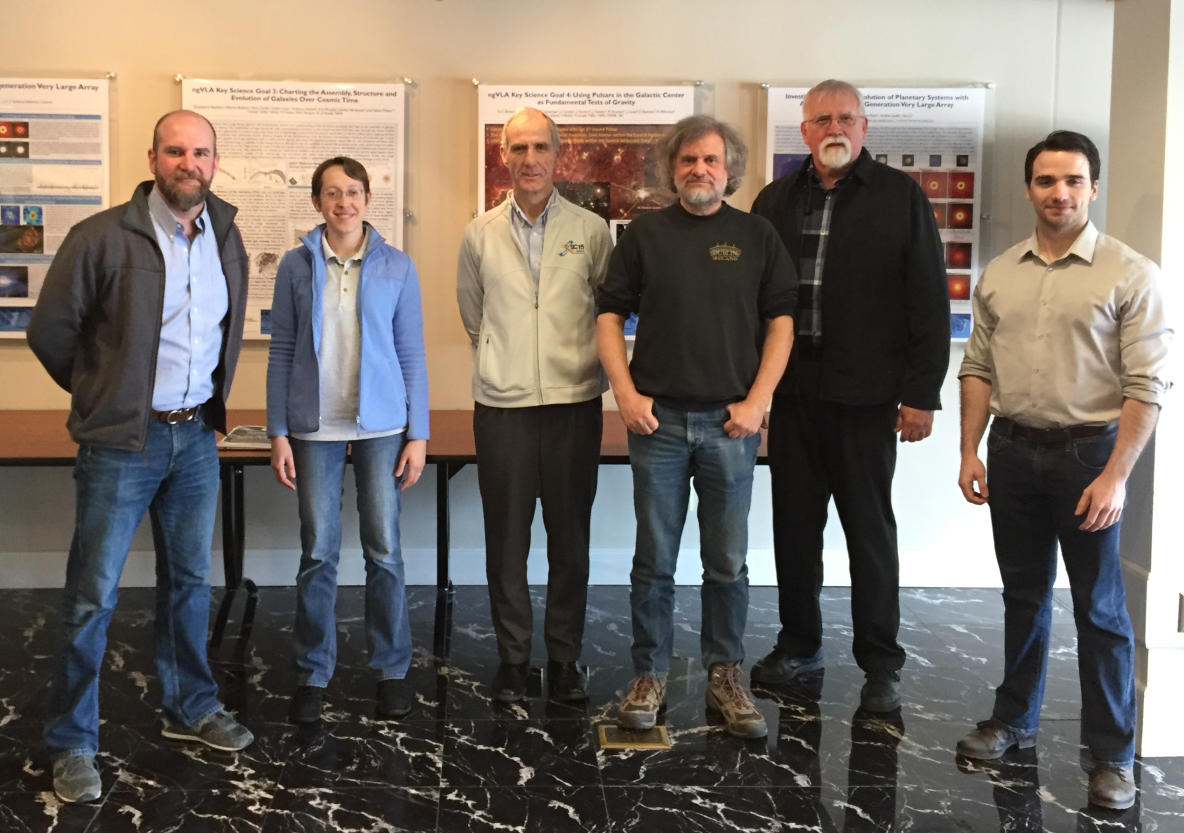
This year we were able to fund the attendance of six students to the Summit. Their names and schools they attend are listed below (see: photo, left to right):
  • Emily Dillon; Master of Science student at Capella University
  • Sanchari Das; PhD student at Indiana University
  • Grant Allard; PhD student at Clemson University
  • Preston Ruff; Bachelor of Science student at New Mexico Institute of Mining and Technology
  • Maggie Ahern; Bachelor of Science student at Lehigh University
  • Leah Dorman; Bachelor of Science student at University of Maine Augusta
We also paired the students with volunteer mentors. We thank them for helping make the students feel welcome at the Summit. Their names and organizations are listed below:
  • Florence Hudson; Trusted CI and Northeast Big Data Innovation Hub
  • Mark Krenz; Trusted CI and Indiana University's CACR
  • Steve Barnet; Wisconsin IceCube Particle Astrophysics Center
  • Susan Sons; Trusted CI and Indiana University's CACR
  • Susan Ramsey; National Center for Atmospheric Research
  • Elisa Heymann; Trusted CI and University of Wisconsin
We asked the students to share some insights into their Summit experience. Their comments are quoted below.

Sanchari Das:

My name is Sanchari and I am a doctoral student in the School of Informatics, Computing, and Engineering at Indiana University Bloomington, specializing in Usable Privacy and Security. I think this summit was a great opportunity to meet researchers and practitioners from other organizations. I thoroughly enjoyed their perspective, and insights in the discipline of cybersecurity and gathered knowledge to pave my future research directions. Given the diverse research areas which was covered, this truly was a golden opportunity to broaden a graduate student's vision, such as myself, understanding more about usable privacy and security.

The NSF cybersecurity summit provided the perfect blend of academicians and those working in industry, who do and preach cybersecurity practices and direct their research accordingly. Given the workshops and talks that was conducted in the summit, it was not limited to discuss cybersecurity infrastructure, but also discussed about the users who are a major part, are affected, and contribute to follow cybersecurity practices. It was one of the gathering where practitioners from the industry likewise joined to discuss around the applications of such research.

As a student I learned about the current challenges in the field of cybersecurity, how usable security and privacy is slowly but surely making its marking where we all aim in not keeping the humans out of the loop but making them aware through simple but informative tools. I also learned how people from different field such as, law (policy makers), software developers, security engineers, academicians can all work together to help build a secure environment to protect data of an organization or individual.

Apart from interesting ideas, I would particularly like to thank my mentor Mark Krenz and Jeannette Dopheide, who made the process smooth and helped me throughout my stay and helped me interact with eminent researchers and practitioners in my field. I enjoyed the workshops I was involved in as well, Susan Son’s insights on the different version controls and monitoring old patches to find loopholes which can be played further was interesting.

I would also like to thank Von Welch, the director of Indiana University’s Center for Applied Cybersecurity Research who is extremely approachable and helps every student to achieve their best in this field through such initiatives.

Grant Allard:

The Trusted CI/NSF 2018 Cybersecurity Summit provides an outstanding opportunity to professionally and scholastically improve my understanding of the key issues in scientific cyberinfrastructure. The Trusted CI leadership team makes you, as a student, feel welcome and helps you to explore the pressing challenges facing the scientific cyberinfrastructure community today. The mentoring initiative associated with the student program is a superb educational tool that helped me put my experience in context and learn from one of the leaders of this field. One of my big takeaways from the week together is the importance that we as students will play to the scientific cyberinfrastructure community as we enter the scientific workforce: cybersecurity is not only a concern for CISOs but for the entire scientific community. The academic community owes a huge debt of gratitude to our CISOs for helping us keep our data secure, accessible, and integral.

I am taking what I learned from this conference and using it to develop a white paper and I identify how I, as an aspiring scholar of public policy, can contribute to the community. This conference also has given me multiple opportunities at my university to meet new people and contribute to new efforts. This experience was exactly how a student program should be--in my opinion--and I highly recommend it to students of all levels or to advisors who are looking to promote their students' growth." 

Preston Ruff:

I enjoyed the close-knit, friendly, and informative experience of the NSF summit. There I was able to test my text parsing skills in a log analysis workshop and I was exposed to the mystery of industrial control systems. Thank you to everyone at Trusted CI for hosting the event. I'm grateful to have met such brilliant people who work to create the cybersecurity systems and policy of tomorrow.

Maggie Ahern:

Attending the NSF 2018 Cybersecurity Summit was a fantastic learning experience. I have always been interested in cybersecurity, but this summit gave insight into the field that I had never been exposed to before. Some of the highlights include Software Engineering Best Practices and Legal Policy on Cybersecurity. I also particularly enjoyed the breakout session we had during lunch where we could discuss different topics of interest. I sat at a table that discussed books with the theme of cybersecurity and I went home with a few recommendations. The Student Program also connected us with a mentor for the duration of the conference. My mentor was incredibly understanding, knowledgeable, and inspiring. She is someone that I really admire and strive to live up to one day. Without this opportunity I probably would not have gotten to meet her, or all the other amazing individuals that I was able to interact with during the summit. All in all, I am incredibly grateful that I was given this opportunity to learn more about this subject and meet new individuals passionate about cybersecurity.

Leah Dorman:

At the NSF Cybersecurity conference, I immediately noticed a coherent understanding of cybersecurity's crucial role in science as well as a collaborative effort to produce trustworthy technology.  The Trusted CI program committee did an excellent job putting on this event and as a student I felt very welcomed and was provided with the information and resources needed to enhance my cybersecurity knowledge and research skills.  The first day was a training day.  I attended Automated Assessment Tools – Theory & Practice which was about injection attacks (one of the most common vulnerabilities) and had hands-on training using source code analysis tools to find code errors and flaws.  Then I attended Security Log Analysis Training which included ideas to improve security logging & monitoring as well as command examples that you can customize on your own logs and how to analyze data and look for patterns.  This hands-on training provided me with valuable experience that would only improve my cybersecurity skills.
The next two days there were several presenters that covered topics such as
  • Security Best Practices for Academic Cloud Service Providers (a big one I took away from this was Identity Access Management-aware Continuous Integration/Continuous Delivery Services)
  • Involving Students in Cybersecurity for CI
  • Silent Librarian (series of phishing attacks)
  • Responding to advanced threats as a global community (building a trust relationship in cybersecurity community)
  • XSEDE lessons learned (importance of multi-factor authentication)
  • Incident Response Communications
  • Password Adventures for a VO
  • A case study on implementing crowdsourced threat intel and active response
Overall, the focus was on being Proactive vs being Reactive; changing the focus of cybersecurity from protecting (specifically against malicious attacks) to enabling - moving beyond the fear of data breach and focusing on how to better enable end users to deal with data theft and how to be ready to respond to events like that.

I am very thankful for the knowledge I gained at this conference. Thank you, Trusted CI, for allowing me to participate as a student and for the engaging conversations and presentations that challenged and enhanced the way I think about cybersecurity.
We were more than impressed with the Student Program this year. Their participation and enthusiasm was a rewarding affirmation of our commitment to community building. We look forward to seeing where their careers take them and sponsoring more students in the future.

Monday, September 24, 2018

Community Produces Security Best Practices for Academic Cloud Resources

A community consisting of members from The Agave Platform (TACC - NSF OAC-SS2-SSI-1450437), Cornell University Center for Advanced Computing (NSF OAC-CC-DNI-1541215), CyVerse (UA - NSF DBI-0735191, DBI-1265383), Jetstream (IU - NSF OAC-1445604) and Trusted CI recently completed an engagement in authoring a set of Security Best Practices for developing in, and operating an academic cloud resource. The culmination of the project, Security Best Practices for Academic Cloud Service Providers, is available at http://hdl.handle.net/2022/22123.

A "cloud resource" within an academic institution provides a means for R&E users to run virtual machines or containers such that they can have a custom software stack and isolation from other users. The virtual machines or container images can be curated and provided by the cloud resource operator, the user, or a third party. This utility, however, presents a number of challenges in the domain of cloud cybersecurity, e.g., the user's image can run with privileged access, an image can be from unknown provenances, controls to reduce the risk an image may cause to both operator and other guests are limited, and managing security updates to an image is cumbersome.

The engagement's collaborative effort in tackling these unique security risks to academic cloud services was guided by three basic principles, specifically: security is a shared concern between a cloud service provider and a cloud service user, neither can expect the other to fully address security; a clean delineation between cloud service provider and cloud service user of security responsibilities is critical to ensure all responsibilities are met; and the cloud service provider has the responsibility to ensure all security responsibilities are articulated and the cloud service user is educated about how to fulfill their responsibilities.

Through sharing experiences, the community detailed the "use cases" they deemed most important to the utility of academic cloud services. The security concerns of each use case were explored, leading to the identification of security best practices that balanced the needs of the stakeholders with mitigations sufficient to address the risk. This process along with the guiding principles resulted in a product that, unlike canonical security best practices, focused not only on the role of the operators, but also on empowering and encouraging the user to take a more proactive stance in cybersecurity. The use cases discussed in the document, and by association the security best practices for each, are:
  1. Disseminating localized best practices to users
  2. Ensuring user image trustworthiness
  3. Providing methods for users to manage their secrets
  4. Supporting privileged access within images
  5. Trying to empower users with self-service DNS management
  6. Similar to 3, providing methods for users to manage their configurations
  7. Providing service accounts as opposed to just user accounts
  8. Offering monitoring services that users can access
  9. Offering Identity and Access Management-aware Continuous Integration / Continuous Delivery services


The community additionally presented their experiences and findings at the 2018 NSF Cybersecurity Summit for Large Facilities and Cyberinfrastructure.

Friday, September 21, 2018

Trusted CI at Gateways '18

On September 25-27, Gateways '18 will happen in Austin, Texas, and Trusted CI is attending as a bronze-level sponsor. The conference, delivered by Science Gateways Community Institute (SGCI), provides a venue for creators and enthusiasts of science gateways -- typically a web portal or a suite of desktop applications that allow science & engineering communities to access shared resources specific to their disciplines -- to learn, share, connect, and shape the future of gateways as part of a vibrant community with common interests.

This gathering for gateway creators and enthusiasts features hands-on tutorials, demos, keynotes, presentations, panels, posters, and plenty of opportunities to connect with colleagues, as well as a Resource Expo which Trusted CI is proud to be participating in. So, if you attend the conference, please stop by our exhibitor’s table, say hello, and learn about Trusted CI’s current activities and resources available for the Gateways Community.

Monday, September 10, 2018

Trusted CI Webinar September 24th at 11am ET: The SCI Trust Framework

David Kelsey is presenting the talk "The SCI Trust Framework" on Monday September 24th at 11am (Eastern).

Please register here. Be sure to check spam/junk folder for registration confirmation email.
E-Infrastructures recognise that controlling information security is crucial for providing continuous and trustworthy services for their user communities. Such infrastructures, including grids and clouds, are subject to many of the same threats and vulnerabilities as each other because of the use of common software and technologies. Users who take part in more than one infrastructure are potential vectors that can spread infection from one infrastructure to another. All infrastructures can benefit from working together and sharing information on security issues.
Security for Collaborating Infrastructures (SCI) is a collaborative activity within the WISE trust community. The aim of the SCI trust framework is to manage cross infrastructure operational security risks. It builds trust between Infrastructures by defining policy standards for collaboration. The SCI group published version 1 of its trust framework in 2013. Two derivative frameworks have also been published; SIRTFI in 2015, and SNCTFI in 2017.
WISE/SCI has more recently produced version 2 of the SCI trust framework, to reflect changes in technology, culture and to cover a broader range of infrastructures. The framework contains numbered requirements in five areas (operational security, incident response, traceability, participant responsibilities and data protection) that each Infrastructure should address as part of promoting trust between Infrastructures. SCI’s updated version 2 was officially endorsed during the TNC 2017 conference by representatives of EGI, EUDAT, GÉANT, GridPP, HBP, PRACE, SURF, WLCG and the USA’s XSEDE e-infrastructure.
The webinar will present the SCI Trust Framework together with current work on a new baseline AUP and a Policy Development Kit. Possible future activities will also be presented.
Speaker Bio:
David Kelsey is head of the particle physics computing group at STFC, UK and has been leading
Grid Security activities in many projects. He founded the Joint (WLCG/EGEE) Security Policy
Group in 2004. He is currently the Chair of the WISE steering committee and was founder of
the SCI activity. He has a Masters degree in Physics (Trinity College, Cambridge) and a PhD in
Physics (University of Birmingham). 

Presentations are recorded and include time for questions with the audience.

Join Trusted CI's announcements mailing list for information about upcoming events. To submit topics or requests to present, see our call for presentations. Archived presentations are available on our site under "Past Events."

Wednesday, August 29, 2018

NRAO and Trusted CI Complete Comprehensive Cybersecurity Program Assessment

Trusted CI and the National Radio Astronomy Observatory (an NSF Large Facility supported in part by NSF Award # 1647378) have completed a successful engagement focused on assessing and facilitating the continued maturation of NRAO’s information security program.  On an accelerated schedule to dovetail with NRAO’s budgetary cycle, we completed an intensive fact-finding phase and delivered a draft copy of a recommendations report providing specific, prioritized actions that NRAO could take to bolster their security program.  Before the engagement execution ended, NRAO used our recommendations to gain initial approval for a budgetary proposal to their executive team, proposing the internal restructuring of their team, hiring a new full-time security position, investing in tools to improve network visibility, and identifying key assets that require additional protection.

David Halstead, Chief Information Officer for NRAO, states,
The Trusted CI engagement allowed Information Services to take a holistic view of the risk and threat landscape facing the observatory’s CI instead of the more traditional audits which largely ignore the research infrastructure and focus on the financial systems.


Engagement Process

Fact-Finding. Trusted CI gathered information using a variety of methods, including dynamic question and answer sessions with NRAO staff and through review of over one hundred public and private documents obtained from publicly accessible websites and from NRAO’s internal document repository.  NRAO also completed our rigorous survey assessing the current state of their cyberinfrastructure.  During this phase of the engagement, we held seven one-hour conference calls together, focused mainly on building Trusted CI’s understanding of NRAO’s security program.

Site Visit. The Trusted CI and NRAO teams also met for a period of three days onsite in Charlottesville, Virginia, giving us an opportunity to interact face-to-face.  During that time, we performed a physical walkthrough of NRAO’s onsite computing infrastructure, interviewed personnel with security functions, and held detailed discussions on the current status of the security program as well as possible opportunities for maturation.  When a passing blizzard forced NRAO to close its doors for one of those days, the teams refused to be slowed down and instead met virtually, maximizing the amount of time we could dedicate to working together.


Recommendations Report. The subsequent report that Trusted CI delivered to NRAO first included a set of foundational recommendations.  Recommendations were marked ‘foundational’ if they appeared feasible to begin in the next six months; called for architectural, philosophical, or major resource additions or reallocations; and were expected to generate strong outcomes, particularly in facilitating other impactful actions.  We organized other recommendations by estimated benefit and cost to implement.  Grounded in best practices and community standards, these recommendations frequently referenced the Center for Internet Security (CIS) Controls and the Australian Signal Directorate’s Essential Eight, two evidence-based control sets, as well as Trusted CI’s four pillar framework for developing cybersecurity programs for open science.

Deep Dives. After delivering the final report, we used the remainder of our engagement time to facilitate phone and email discussions focused on implementing these recommendations.  Dr. Jim Basney and Ryan Kiser, Trusted CI subject matter experts in federated identity management and application authorization respectively, each joined for a conference call focused on his area of expertise in order to share insights and answer questions posed by NRAO.  Other topics of conversation included inventory and asset management, network visibility, and Trusted CI’s process and tools for self-assessing gaps and actions under the CIS Controls v7.

Reflections and Acknowledgements

NRAO’s effort and openness were critical to the success of this engagement.  Their willingness to share information, including providing access to NRAO’s internal documents, allowed us to tailor our recommendations to their specific level of maturation in each area.  We would like to thank all of the NRAO staff who spent time talking with us and responding to our questions, especially our primary engagees David Halstead and Pat Murphy, as well as Chris Clark, Karyn Roberts, Derek Hart, Josh Malone, Matthew McCleary, Ferzen Manglicmot, Wolfgang Baudler, Warren Richardson, and Guilhem Werbelow.

NRAO’s commitment extended beyond participation and into implementation, as evidenced by how quickly the organization created a plan based on Trusted CI’s recommendations and moved to enact it.  We are excited to see this engagement already having a major impact on the funding, structure, and visibility of their security program.

We would also like to thank Steven Berukoff and Tony Hays from the Daniel K. Inouye Solar Telescope (DKIST) project for permitting us to share one of their internal network diagrams with NRAO.  Steven and Tony had presented this diagram to us during a prior Trusted CI engagement and agreed to let us share it with NRAO.  Their example of “documentation done well” assisted in facilitating a discussion on the kinds of network documentation most useful from a security and operations support standpoint.

Through interacting with NRAO and learning about their cybersecurity needs, the Trusted CI team continued to refine our understanding of the unique challenges and opportunities involved with securely supporting science.  We look forward to continuing to engage, advise, and grow with the community in this evolving landscape.  For more information on how to work with us, please visit our engagements page.

Monday, August 27, 2018

Apply for a One-on-One Engagement with Trusted CI for Early 2019

Trusted CI is accepting applications for one-on-one engagements to be executed in January - June 2019.  Applications are due October 1, 2018. (Slots are limited and in demand, so this is a hard deadline!)

To learn more about the process and criteria, and to complete the application form, visit our site:


During CTSC’s first 5 years, we’ve conducted more than 24 one-on-one engagements with NSF-funded projects, Large Facilities, and major science service providers representing the full range of NSF science missions.  We support a variety of engagement types including: assistance in developing, improving, or evaluating an information security program; software assurance-focused efforts; identity management; technology or architectural evaluation; training for staff; and more.  

As the NSF Cybersecurity Center of Excellence, CTSC’s mission is to provide the NSF community a coherent understanding of cybersecurity’s role in producing trustworthy science and the information and know-how required to achieve and maintain effective cybersecurity programs.

Tuesday, August 14, 2018

Trusted CI Begins Engagement with the Environmental Data Initiative

The Environmental Data Initiative (NSF DBI-1565103 and DEB-1629233) is an NSF-funded project accelerating curation and archive of environmental data, emphasizing data from projects funded by NSF’s Divisions of Biological Infrastructure and Environmental Biology.  EDI provides support, training, and resources to help archive and publish high-quality data and metadata. They operate a secure data repository and work closely with the Long Term Ecological Research Network (LTER) and DataONE to promote data management best practices.

The goals of this engagement are to review current authentication and authorization mechanisms, identify features and requirements for the future version of the EDI Data Portal and associated backend API, and document currently available authentication and authorization solutions. 

The Trusted CI-Environmental Data Initiative engagement began August 2018 and is scheduled to conclude by the end of December 2018.